If you’ve ever ordered a driveway alarm, unboxed it with confidence, and then spent the next two weeks chasing ghost alerts triggered by a passing crow or a stiff breeze — you already know the problem this article addresses. A wireless motion alarm system is a combination of two separate components: an outdoor PIR sensor (PIR stands for passive infrared, meaning it detects the heat signature of a moving body rather than bouncing a signal off it) and an indoor wireless receiver that chimes or alerts when the sensor fires. Those two components each have their own range figure, and conflating them — which the packaging encourages you to do — is the single most reliable way to end up disappointed. This guide breaks down what the specs actually mean, why false triggers happen and how to suppress them, and gives you a clear decision framework for the most popular consumer-grade systems on the market as of mid-2026.
The Range Spec You Need to Understand Before You Buy Anything
Here’s the number one thing to get straight before evaluating any product in this category: “328 ft range” almost never means the sensor detects motion 328 feet away. It means the RF (radio frequency) link between the outdoor sensor unit and your indoor receiver can maintain a reliable signal across approximately 328 feet of open air.
The actual PIR detection zone on most consumer driveway alarm sensors — including units marketed specifically as “long-range” — typically runs 20 to 50 feet, with the detection cone covering a horizontal arc of roughly 90 to 120 degrees. One owner review aggregated on a major retail platform measured active PIR detection at approximately 35 feet under real-world conditions; the same system was marketed with a 328 ft RF transmission spec on the front of the box.
This is not fraud, strictly speaking. The RF range claim is real and testable. But the framing invites misreading, and aggregated buyer feedback reviewed across multiple retail platforms suggests a significant share of returned or poorly-reviewed units were purchased by someone who expected to detect a vehicle at the far end of a long rural driveway from a single sensor node — which no sub-$100 PIR-based system is designed to do.
The two numbers you actually need to ask for:
| Spec | What it measures | Typical consumer range |
|---|---|---|
| PIR detection distance | How far away a human-sized heat source triggers the sensor | 20–50 ft (6–15 m) |
| RF transmission range | How far the sensor’s signal reaches the indoor receiver | 300–1,000 ft (91–305 m) open air |
If your driveway is longer than 50 feet, you need multiple sensor nodes — not a longer-range single unit.
Sensors Magazine, in its technical library coverage of PIR fundamentals (“PIR Motion Sensor Fundamentals and Application Constraints”), confirms this architecture: the pyroelectric element inside a PIR sensor responds to differential infrared change across its Fresnel lens zones, and the physics of that detection mechanism caps practical outdoor range well below what an RF link can achieve.
False Triggers: Why They Happen and How to Actually Suppress Them
Across aggregated owner reviews — including hundreds of verified purchaser comments on retail platforms — false triggers from wind movement and animals are the single most consistent complaint in this category. One reviewer awarded a system four out of five stars explicitly because everything else worked well, but wind-blown foliage within the detection cone produced daily nuisance alerts. This is not a quality defect. It is a fundamental property of PIR sensing that you can manage, but not eliminate without hardware changes.
Why wind triggers PIR sensors: PIR sensors do not detect motion directly. They detect a change in infrared radiation across two or more sensing zones. A tree branch moving in wind doesn’t produce a human heat signature — but if the branch is warm enough relative to the background sky temperature (common on a sunny afternoon), rapid oscillation across zone boundaries can produce a differential signal above the sensor’s trigger threshold.
Why small animals trigger sensors: A cat or rabbit moving slowly through the detection cone at close range (under 15 feet) often does trigger consumer PIR sensors, because the heat differential is sufficient even if the body mass is smaller than intended. At longer range — say, beyond 25 feet — smaller animals frequently do not trigger, because the apparent angular velocity across lens zones drops below the sensor’s minimum threshold.
IEEE Spectrum, in its examination of false alarm rates in passive infrared security systems (“False Alarm Rates in Passive Infrared Security Systems”), identifies vegetation within 10 feet of the sensor aperture as the leading environmental contributor to spurious triggers in residential deployments.
Practical suppression strategies that owner reviews confirm actually work:
-
Mount height and angle. Mounting at approximately head height and angling the sensor slightly downward produces reliable human detection while eliminating most pet triggers. At head height, a small animal must be nearly directly in front of the sensor to subtend a significant solid angle across the lens zones; a human walking upright fills the detection cone at a much wider range of positions.
-
Sensitivity adjustment. Most mid-tier and above consumer systems include a potentiometer or DIP switch for sensitivity scaling. Owners consistently report that backing sensitivity off one or two notches from maximum eliminates wind and small-animal triggers without meaningfully reducing detection distance for humans.
-
Positioning relative to vegetation. Mount the sensor so that no branches, tall grass, or shrubs exist within the primary detection cone. This single step accounts for a disproportionate share of false-trigger reductions reported in owner feedback.
-
Fresnel lens masking. Some experienced installers mask sections of the Fresnel lens with black electrical tape to create a narrower, more directional detection beam — useful when the standard cone is too wide for a specific lane-of-approach scenario.
System-by-System Breakdown: Which Tier Fits Your Install
Budget-Tier Systems: Wide Availability, Coarser Controls
Wireless
$20.17
In stock on Amazon
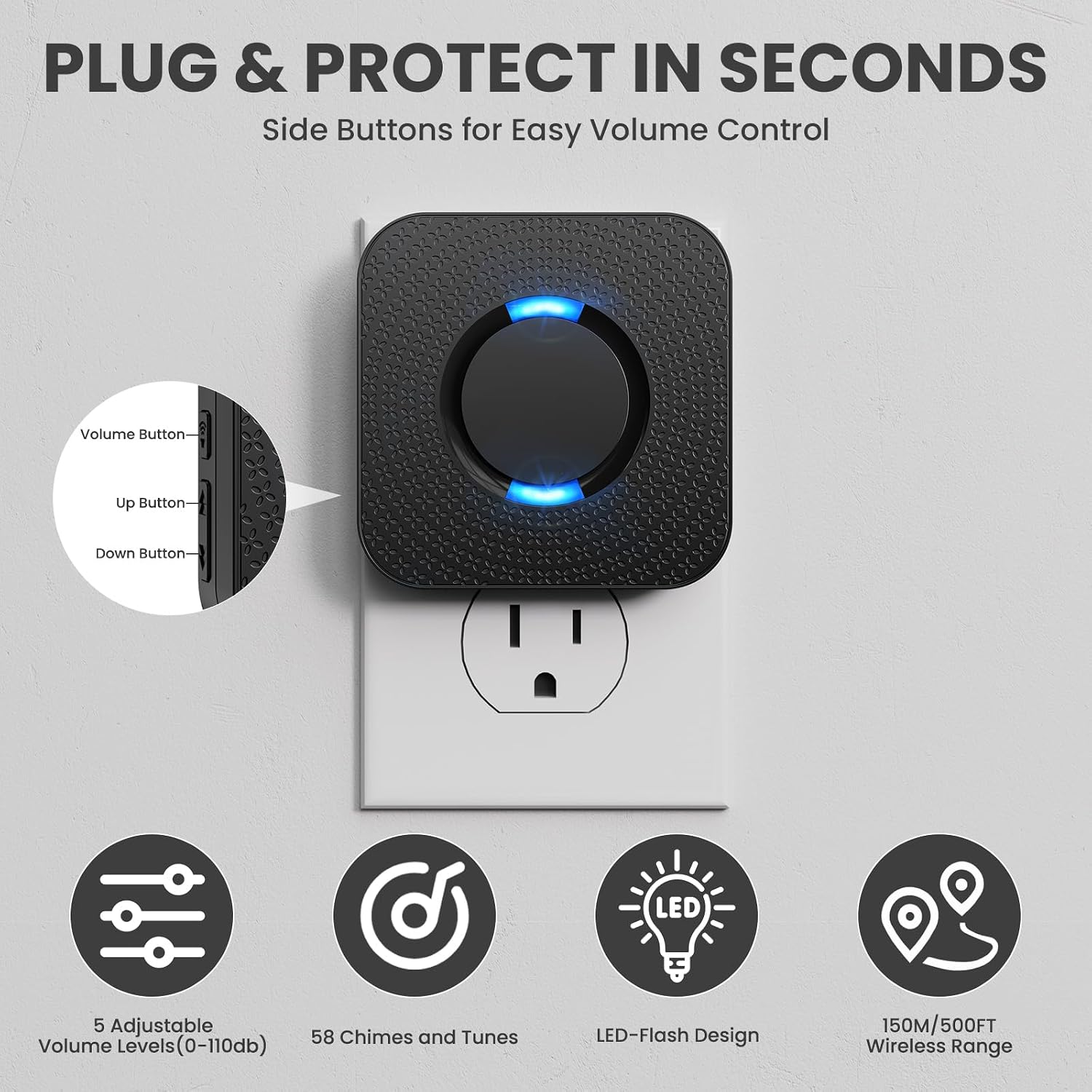
Check price on AmazonEntry-level driveway alarm systems — typically priced under $35 — deliver the core function: a PIR sensor fires, an RF signal travels to the indoor receiver, and a chime sounds. The tradeoffs at this tier are consistent across owner feedback aggregations. Sensitivity adjustment is often limited to a single high/low toggle rather than a graduated scale, which makes nuisance-trigger suppression a positioning problem rather than a configuration problem. If your install environment is clean — a straight driveway with no vegetation in the detection cone and minimal animal traffic — budget-tier systems earn strong marks for reliability and simplicity.
The realistic limitation: RF range figures on budget systems tend to be optimistic even by the generous standards of the category. Control Engineering, in its technical coverage of wireless sensor range and RF link budgets (“Wireless Sensor Range and RF Link Budgets in Industrial Environments”), notes that real-world RF range through building walls typically runs 40 to 60 percent of open-air rated distance. Budget receivers with a 300 ft open-air rating may struggle to reach a receiver in a central hallway when the sensor is mounted at the front property line.
Best for: Short driveways under 30 feet, renters who want easy removal, secondary alert zones in a yard already covered by a primary system.
Wireless
$20.17
In stock on Amazon
Check price on AmazonMid-Tier Systems: The Best Balance for Most Residential Installs
328ft
$39.99
In stock on Amazon
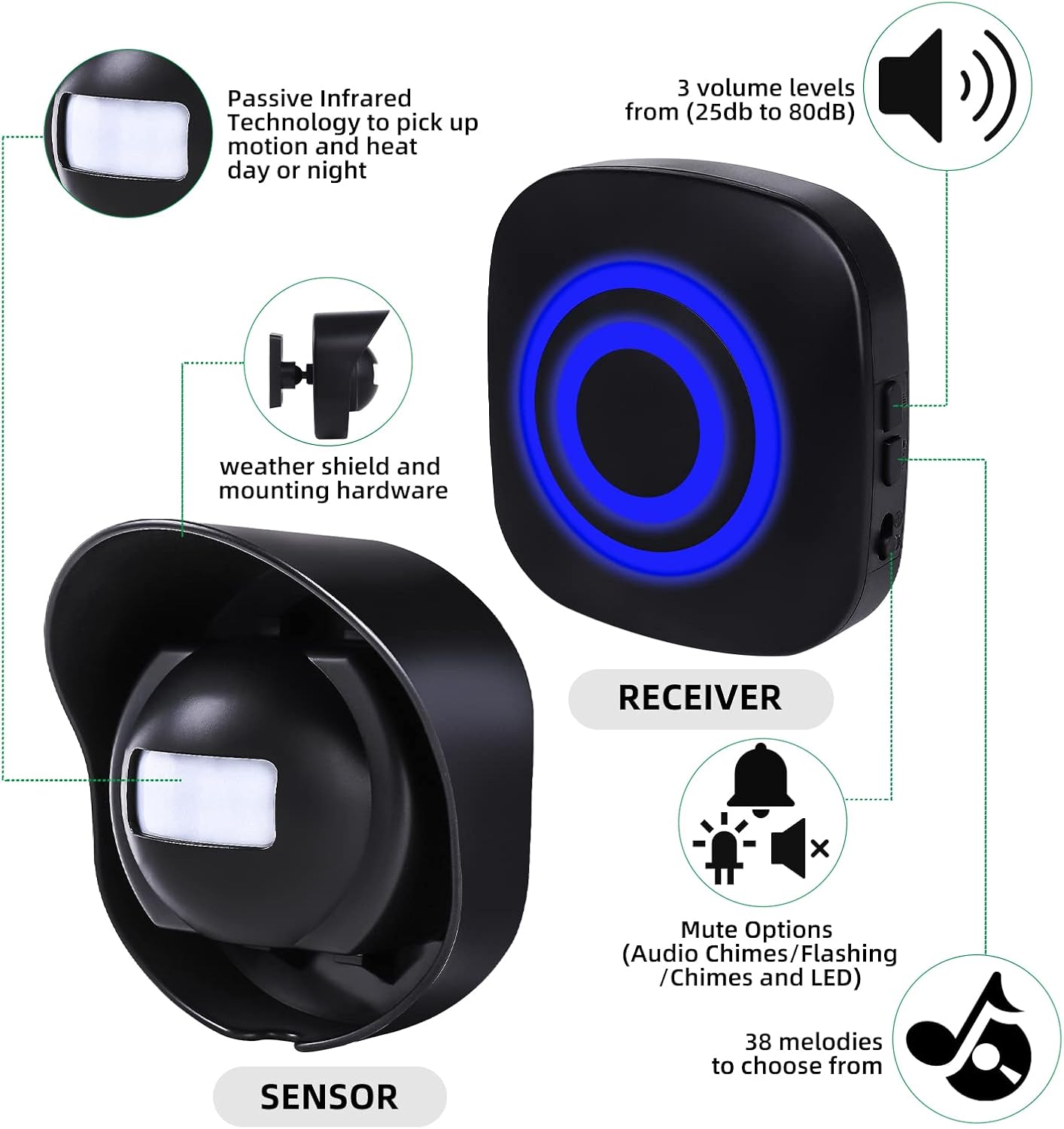
Check price on AmazonSystems in the $40–$70 range — typically rated at 500 ft RF range, with multi-sensitivity controls and support for pairing additional sensor nodes — represent the best balance for most residential and light commercial applications. Owner feedback on units in this class is notable for two recurring use cases:
- A boat owner used a system in this tier to monitor a marina slip overnight. The system triggered reliably on human-sized targets in low-light conditions — which PIR handles identically to daylight, since PIR detects infrared heat rather than visible light.
- Homeowners with dogs consistently report that the head-height mounting approach combined with moderate sensitivity produces essentially zero false triggers from household pets while maintaining reliable pedestrian detection at the driveway entrance.
The multi-zone architecture at this tier is the key differentiator from budget systems. Most mid-tier receivers support 4 to 16 sensor nodes, with distinct chime tones or zone indicators assignable per channel. For a driveway-plus-gate-plus-side-yard install, this is the minimum viable tier.
Best for: Driveways 30–80 feet, multi-zone residential coverage, installs where animal or wind false triggers are a known concern.
328ft
$39.99
In stock on Amazon
Check price on AmazonPremium and Solar-Powered Systems: Remote Installs and Extended Autonomy
Driveway 2R1S
$50.99
In stock on Amazon
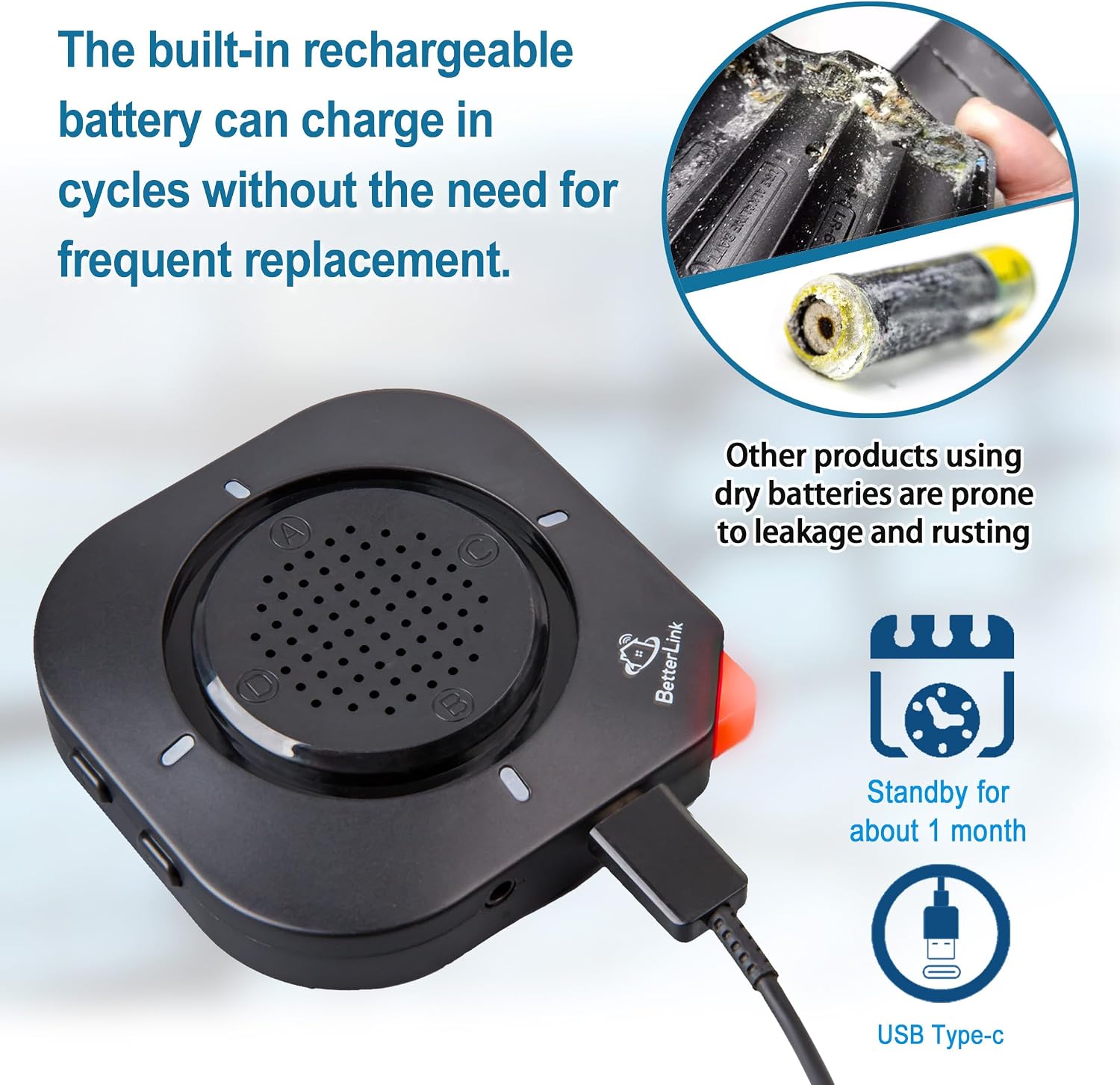
Check price on AmazonSolar-panel integration is a genuine differentiator for remote or outbuilding installs where running wire is impractical. The realistic concern — and the question most buyers in cold climates raise — is winter performance under extended cloud cover.
Owner reviews of solar driveway alarms in northern-climate deployments are more positive than expected. Multiple reviewers report reliable operation through extended overcast periods, citing battery backup capacity as the functional variable rather than panel output. The key spec to verify: battery capacity in milliamp-hours (mAh) and the manufacturer’s stated backup duration at rated operating temperature. Systems with 2,000 mAh or greater backup consistently draw praise for winter reliability; systems under 1,200 mAh draw complaints in climates with more than two or three consecutive overcast days.
Automation World, in its coverage of outdoor sensor installations (“Understanding IP Ratings for Outdoor Sensor Installations”), confirms that IP65 or IP66 ratings — dust-tight, protected against water jets — are the minimum acceptable threshold for any sensor mounted in an exposed outdoor position. IP55 is marginal for direct weather exposure; anything lower should not be considered for year-round outdoor mounting.
Premium bracket-mount systems in this tier also tend to offer finer sensitivity graduation, tamper detection, and in some cases 900 MHz RF links that penetrate building structures more reliably than 433 MHz budget-tier radios.
Best for: Remote gates and outbuildings with no power run, northern-climate installs requiring winter reliability, properties where sensor tamper detection is a priority.
Driveway 2R1S
$50.99
In stock on Amazon
Check price on AmazonMulti-Sensor Pairing and Integration with Camera Systems
Can you pair multiple sensors to one receiver? Yes, in virtually every current consumer system in this category. The practical limit depends on the receiver’s channel count — most support 4 to 16 zones — and whether each zone can be assigned a distinct chime tone or indicator so you know which sensor fired. For a driveway-plus-gate-plus-side-yard install, verify zone count before purchasing.
Using alongside a camera system: PIR alarm sensors and security cameras serve different functions and complement each other cleanly. The PIR alarm gives you an immediate audio alert; the camera gives you a recorded image. They share no signal infrastructure in consumer installations, so there is no integration conflict. The practical workflow most owners use: the alarm chime prompts them to check the camera feed. This layered approach — immediate alerting paired with evidentiary capture — requires no technical integration between the two systems.
Frequently Asked Questions
Does the “328 ft range” mean the sensor can detect motion 328 feet away? No. That figure is the RF transmission range between the outdoor sensor and your indoor receiver. Actual PIR detection distance on consumer driveway alarms is typically 20–50 feet. If your driveway is longer than that, you need additional sensor nodes positioned along the approach.
How do I stop my driveway alarm from triggering on wind or small animals? Mount the sensor at approximately head height and angle it slightly downward. Reduce sensitivity one or two notches from maximum. Eliminate vegetation from the primary detection cone. Owners consistently report that these three steps together reduce nuisance triggers substantially without meaningfully degrading human detection.
Can I pair multiple sensors to one receiver? Yes. Most consumer systems support 4–16 sensors per receiver. Confirm zone count and whether distinct chime tones are assignable per zone before purchasing.
How loud is the indoor receiver at maximum volume? Published specs on most consumer receivers cite 85–110 dB at maximum. Owner reviews suggest the higher figures (100+ dB) are genuinely loud enough to hear in an adjacent room with a door closed; the lower end of that range is more comparable to a standard doorbell.
Will the outdoor sensor survive rain and freezing temperatures? Check the IP rating. IP65 is the practical minimum for exposed outdoor mounting. Sensors rated IP65 or IP66 handle rain, snow, and ice reliably across northern-climate installations. Avoid anything rated below IP55 for exposed positions.
Can I use this alongside a separate security camera system? Yes, without any technical integration required. The PIR alarm and camera system operate independently. The standard owner workflow is to let the alarm chime prompt a manual camera check — a layered approach that combines real-time alerting with recorded footage.
The Decision Rule
- If your driveway is under 40 feet and false triggers are your primary concern: Go with a bracket-mount mid-tier system, mount at head height, and back off sensitivity. Owner reviews in this configuration are consistently strong.
- If your driveway is over 40 feet: Buy a system that supports multiple sensor pairing and plan for two or more sensor nodes. A single sensor — regardless of what the box says — will not reliably detect at 100+ feet.
- If you’re installing at a remote outbuilding or gate with no power run: Solar with 2,000+ mAh battery backup is the correct call. Winter performance reviews support it.
- If setup simplicity matters more than sensitivity fine-tuning: Tape-mount systems are genuinely easier to reposition during the calibration phase and draw strong marks for RF coverage across a standard residential footprint.
The RF range on the box is a transmission spec. The detection range is a physics spec. Match your sensor count to your driveway length, your mount height to your threat profile, and your IP rating to your climate — and the false-trigger complaints that fill the one-star reviews won’t be yours.