A PIR (passive infrared) sensor detects motion by reading the heat signature — the infrared radiation — that warm-blooded bodies emit as they move through a sensor’s field of view. When that signature crosses a detection zone, the sensor triggers an alert: a chime, a panel alarm, a camera, or whatever output you’ve wired or paired to it. The technology is cheap, reliable, and everywhere — but “PIR driveway sensor” covers an enormous range of products, from a $25 wireless chime kit you can stick on a fence post to a hardwired commercial detector like the Honeywell IS335 that integrates into a full alarm panel. If you’re trying to protect a driveway, a boat yard, a back fence, or a multi-entry facility and you’re not sure whether to go wireless or wired, this comparison will give you the decision framework to choose correctly — and avoid the planning traps that buyers consistently fall into.
| EDITOR'S PICKDriveway Alarm Systems Weatherp… | Mid-tierIS335 WIRED PIR Motion Detector | Budget pickWireless Motion Sensor LED Ligh… | |
|---|---|---|---|
| Detection Range | — | 40' x 56' | 500 FT |
| Wired/Wireless | — | WIRED | Wireless |
| Siren Output | 120dB | — | — |
| Alert Type | Sound and Light | — | LED Light |
| Weatherproof | Weatherproof | — | — |
| Included Units | 2R1S | — | 1 Receiver+1 |
| Price | $50.99 | $26.51 | $20.17 |
| See on Amazon → | See on Amazon → | See on Amazon → |
The Core Tradeoff: Flexibility vs. Reliability
This is the axis almost every other consideration branches from, so let’s state it plainly before going deeper.
Wireless PIR Systems
Wireless
$20.17
In stock on Amazon
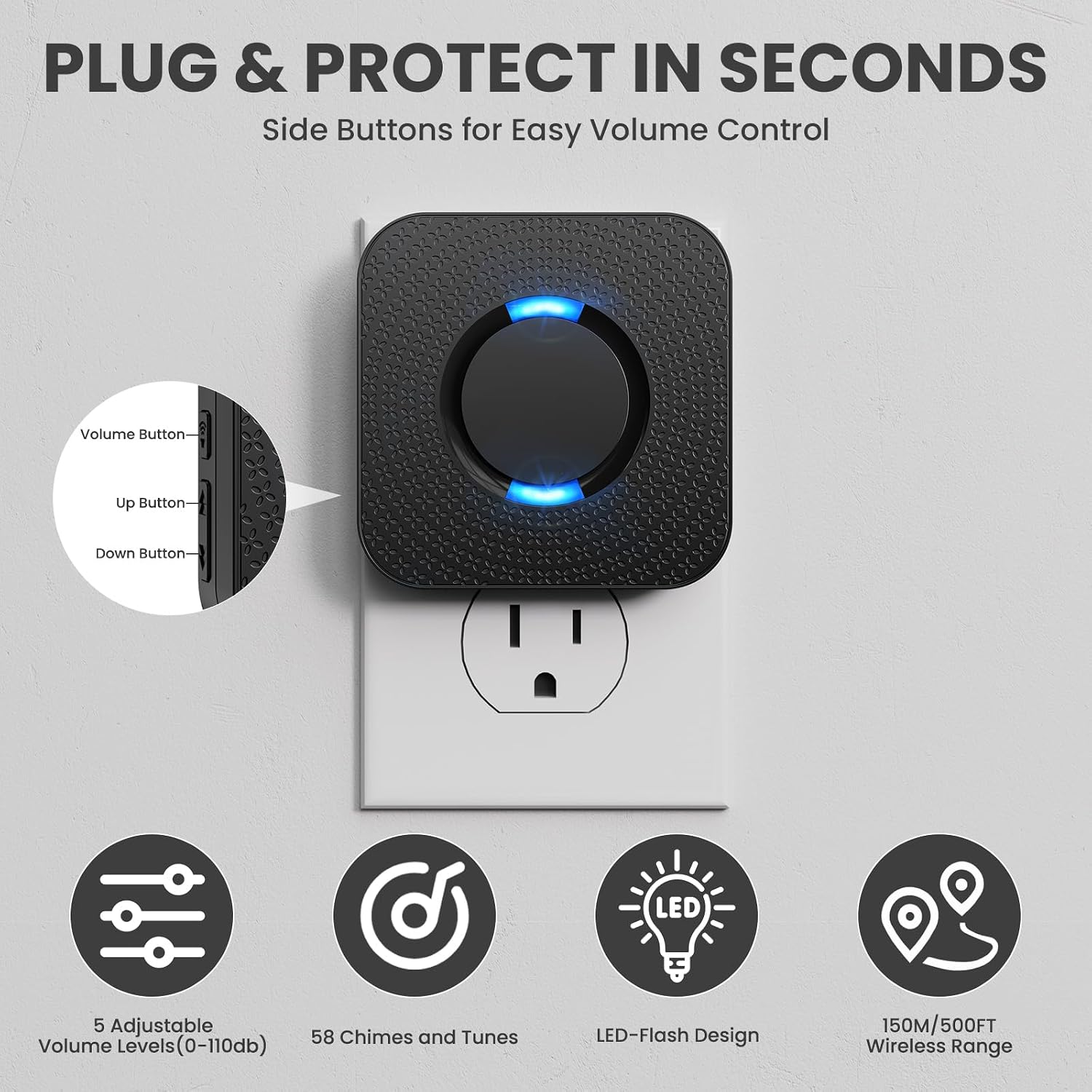
Check price on AmazonWireless PIR systems — products built around the same 433 MHz or 900 MHz radio architecture used in consumer driveway alarm bundles — win on installation speed and placement flexibility. You mount the sensor, drop in batteries, pair to a receiver, and you’re done in under an hour. No conduit, no cable trench, no junction boxes. For a rural property owner covering a gate 600 feet from the house, or a boat-yard manager who needs a sensor watching a water-access point that has zero infrastructure nearby, wireless is often the only practical answer without a major civil works budget.
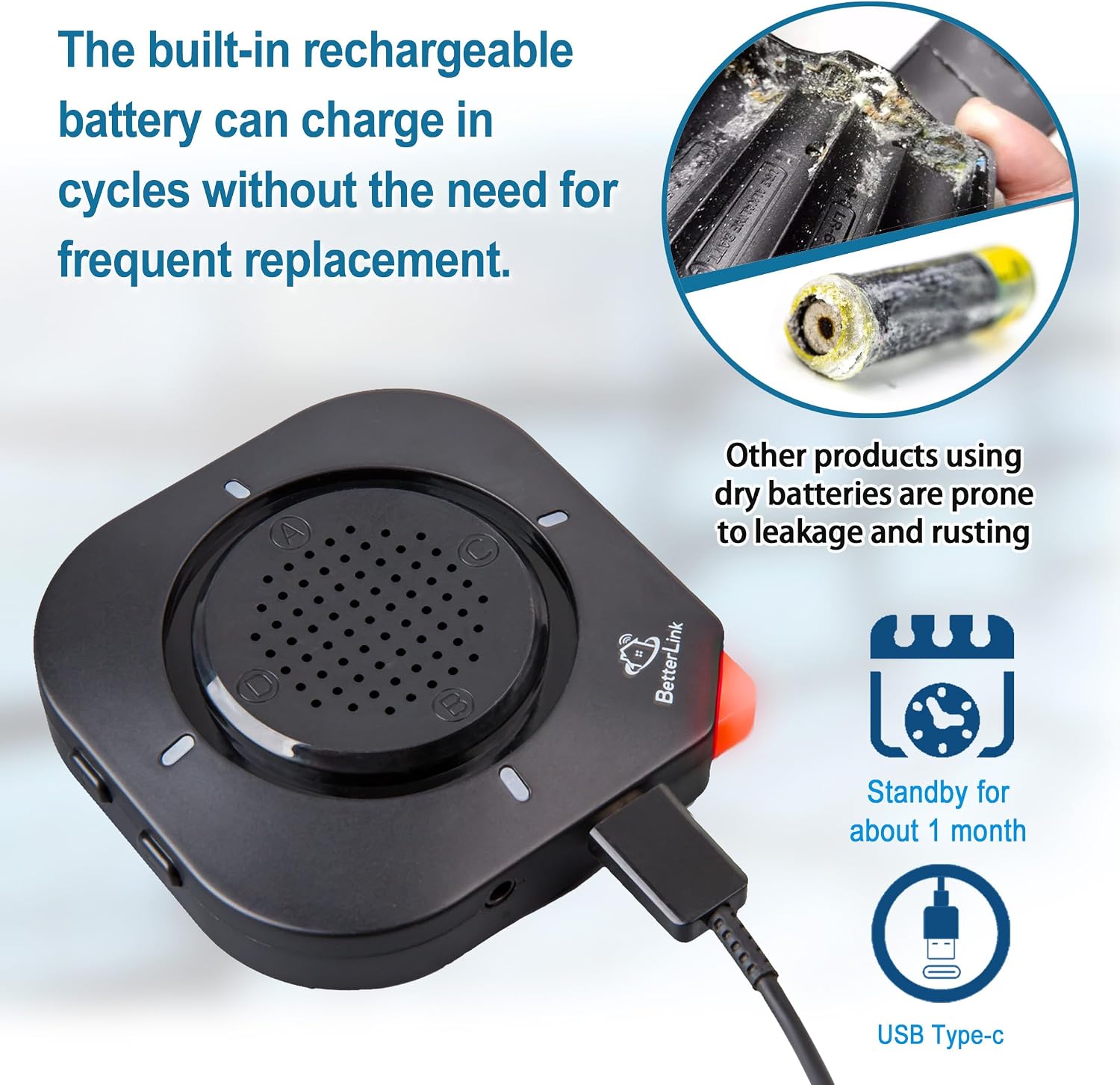
The tradeoffs are real: batteries require periodic replacement, RF interference is a genuine reliability variable, and pairing stability can degrade after firmware updates on smarter receiver units. For buyers who need fast deployment and can tolerate that maintenance overhead, the wireless category delivers strong value per dollar. This is the right tier for residential driveways, short-term deployments, and locations where running cable is cost-prohibitive.
Wireless
$20.17
In stock on Amazon
Check price on AmazonMid-Range Hybrid Systems
IS335
$26.51
In stock on Amazon
Check price on AmazonMid-range PIR systems occupy a practical middle ground: wireless sensors with AC-powered base receivers that expose a dry-contact relay output. This architecture allows a wireless sensor to trigger a zone input on an existing hardwired alarm panel — giving you wireless sensor placement flexibility without fully abandoning panel integration. Sensors Magazine (sensorsmag.com), in its editorial coverage of PIR application design, identifies this relay-output bridge as standard practice for hybrid security architectures.
The typical setup: the base receiver sits near the panel, powered from an outlet, and its relay contacts are wired to a spare zone terminal. The panel treats it as any hardwired zone. The constraint is that the relay output is only available on AC-powered receivers — battery-only receivers typically do not expose this output — and relay pulse timing must match your panel’s minimum zone pulse width, usually 200–500 ms. For facility managers who already own a DSC, Honeywell VISTA, or equivalent panel and want to extend coverage to a remote driveway or gate without trenching cable, this is the architecturally correct approach at a realistic cost.
IS335
$26.51
In stock on Amazon
Check price on AmazonHardwired Commercial-Grade PIR Detectors
Driveway 2R1S
$50.99
In stock on Amazon
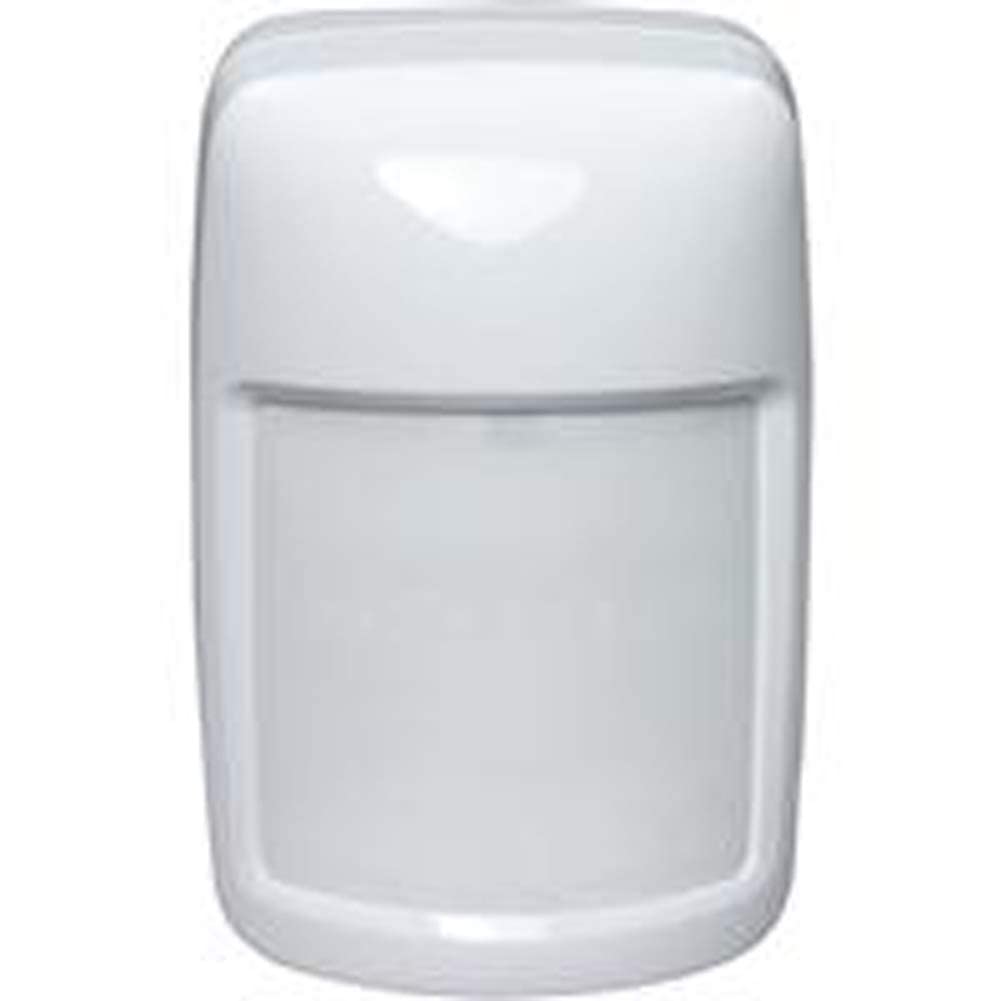
Check price on AmazonHardwired PIR detectors — the Honeywell IS335 being the representative example — are the correct choice for permanent installations with a 10-year horizon. The IS335 publishes a detection pattern of 35 × 50 feet, is compatible with standard alarm panel zone inputs, and eliminates the three ongoing costs of wireless systems: battery replacement, RF reliability management, and pairing stability. Reviewers who have deliberately selected the IS335 over wireless alternatives describe it consistently as a dependable, permanent fixture that simply works.
Automation World (automationworld.com), in its coverage of layered perimeter detection strategies for facility security, notes that wired detectors in correctly specified enclosures — with appropriate lens selection for the environment — achieve substantially lower nuisance alarm rates than wireless consumer units in equivalent applications. For a facility manager commissioning a shipping dock, parking structure, or perimeter fence line, the installation labor cost of a wired run is a one-time expense that pays back in eliminated maintenance and improved reliability over the life of the system.
Driveway 2R1S
$50.99
In stock on Amazon
Check price on AmazonRange: What the Advertising Number Doesn’t Tell You
Almost every wireless driveway alarm kit you’ll evaluate advertises a radio transmission range somewhere between 500 feet and half a mile (2,600 feet). Here’s what that number actually means: it’s line-of-sight, in open air, with no obstructions, at the center of the antenna’s radiation pattern.
Real-world working range is a fraction of that. Control Engineering (controleng.com), in its coverage of wireless sensor reliability in industrial environments, notes that foliage, terrain variation, building walls, and RF congestion in the 433 MHz band can reduce effective range by 50–80% compared to specification figures. For a driveway sensor application, the practical planning table looks like this:
- Advertised range of 500 ft (open-air, line-of-sight): expect 200–300 ft with a dense tree line or one intervening wall
- Two walls or significant grade change: budget 100–150 ft and validate signal at the intended mount point before permanent installation
- Half-mile (2,600 ft) advertised systems: plan for 800–1,200 ft in typical rural terrain with mixed foliage
The PIR detection range is a separate figure — most consumer driveway sensors detect motion at 20–40 feet regardless of radio range. The radio range only governs how far the alert signal travels back to the receiver. If your sensor is 400 feet away and your working RF range under site conditions is 300 feet, you have a gap — and you won’t discover it until the first missed event.
Wired systems sidestep RF propagation entirely. A hardwired run to an IS335 at 500 feet of cable is 500 feet of reliable signal. The cost is installation labor, not detective work on antenna geometry.
False Triggers: Where Each Architecture Fails
Both wired and wireless PIR sensors false-trigger — but they fail in different ways, and understanding the failure mode matters for system planning.
Wireless systems are susceptible to RF interference and to the classic PIR false-alarm sources: direct sunlight hitting the sensor lens, small animals (squirrels, cats, and large insects in warm weather) crossing the detection zone, and reflective surfaces creating thermal gradients the sensor interprets as motion. A rural owner using a wireless base system to monitor a back fence for coyotes is working with this limitation consciously — any detected heat signature at the fence line is worth knowing about, and wildlife triggers are an acceptable cost. That’s a deliberate fit. For a shipping dock manager who needs to know specifically when a truck is backing in — not when a stray cat walks across the apron — that same system creates alert noise that erodes operational trust.
Wired systems false-trigger primarily from environmental sources: HVAC air currents in indoor installations, fluorescent light cycling in some older PIR chipsets, and direct sun on the lens. Properly sited, the IS335’s dual-element pyroelectric design and published immunity specifications address most of these. Automation World’s perimeter detection coverage reinforces that correctly specified wired detectors in appropriate enclosures achieve dramatically lower nuisance alarm rates than wireless consumer units in equivalent environments.
Volume as a false-trigger proxy: A recurring complaint across wireless chime receiver reviews deserves attention here. Owners consistently report that even the lowest chime volume setting is louder than expected — described repeatedly as “very loud” — making false triggers a quality-of-life problem indoors. A receiver sitting in a kitchen or bedroom that blasts an alert every time a squirrel crosses the sensor at 3 AM is a practical system failure even if the sensor is technically working correctly. If your installation is residential and the receiver lives indoors, evaluate the receiver’s minimum volume and chime silencing options as seriously as you evaluate the sensor’s detection specifications.
System Planning: Receivers, Zones, and Layered Architecture
How Many Receivers Do You Actually Need?
This is the planning gap buyers fall into most consistently, and the review record on multi-sensor bundles makes it visible. A single receiver placed in one location cannot adequately serve multiple entry points across a large property or facility. A receiver in a main living space cannot be reliably heard in a detached garage or outbuilding 200 feet away.
The rule: plan one receiver per occupied space that needs an audible alert — not one receiver per property. A property with a front driveway, a side gate, and a back fence being monitored simultaneously needs at least two receivers, and ideally three if there’s a shop, warehouse, or outbuilding in the loop. Systems that support unlimited receiver pairing on a single base unit give you this flexibility at low incremental cost; systems with a one-to-one pairing limit do not. Confirm pairing limits before committing to a multi-sensor bundle.
Using One Base Unit for Multiple Detection Zones
The correct architectural approach for perimeter detection with multiple entry points is one base unit supporting multiple sensors, each assigned a distinct alert tone or chime number so you can identify which zone triggered. A boat-yard owner facing a threat model that includes perimeter breaches at both a vehicle gate and a water-access point benefits from exactly this setup: sensor one at the gate, sensor two at the waterline, single AC-powered receiver in the office, distinct chime codes for each zone.
For permanent commercial installations with higher stakes, Automation World’s perimeter detection coverage recommends layering PIR with a secondary technology — a vehicle detector loop, a microwave sensor, or a video analytic system — to filter false triggers before an alert escalates. A PIR sensor alone, wired or wireless, is a single-technology detection layer and should be treated as one input to a decision, not the final word on whether a threat is present.
If X, Then Y: The Decision Rules
-
If your installation is permanent, panel-integrated, and you have conduit access or can run cable: wired PIR (IS335 class) is the correct choice. Battery replacement and RF reliability are ongoing costs you are eliminating permanently.
-
If your installation requires placement more than 100 feet from any power or cable infrastructure: wireless is your only practical option. Plan RF range at 40–50% of advertised spec for non-line-of-sight terrain and validate at the mount point before permanent installation.
-
If you need a wireless sensor to trigger an existing hardwired alarm panel: confirm the base receiver exposes a dry-contact relay output on an AC-powered unit before purchasing the bundle. Verify relay pulse timing against your panel’s minimum zone pulse width.
-
If you need coverage across multiple entry points: verify the system supports multi-sensor pairing, and budget one receiver per occupied space that needs audible alerting.
-
If your receiver will be indoors in a residential space: confirm the minimum chime volume and availability of a silent or visual-only alert mode before purchase. Volume mismatch is a consistent real-world complaint, not a minor issue.
-
If your threat model involves wildlife or any warm-blooded animal in the detection zone: PIR will trigger on all of them. If that’s intentional, the system is correctly specified. If it is not intentional, you need either a pet-immune lens option or a secondary detection layer to validate alerts.
Frequently Asked Questions
How many receivers do I actually need for a system covering multiple entry points? Plan one receiver per occupied space that needs to hear an alert. A three-entry property with a house, garage, and workshop needs three receivers if all spaces need coverage. Confirm your system supports unlimited receiver pairing; some budget systems limit pairing to a single receiver per base unit.
Is the advertised half-mile range realistic? No. Line-of-sight specification figures drop 50–80% in real-world terrain with foliage, walls, or grade changes, per Control Engineering’s coverage of wireless sensor reliability. Budget for 40–50% of the advertised figure when planning placement, and validate signal at the intended mount point before permanent installation.
Can I connect a wireless driveway sensor to my existing hardwired alarm panel? Yes, if the base receiver exposes a dry-contact relay output — which AC-powered receivers typically do. Wire the relay’s normally-open contacts to a zone input terminal on your panel and configure as a perimeter zone. Sensors Magazine’s PIR application design coverage identifies this as standard practice for hybrid security architectures. Verify relay pulse timing against your panel’s minimum zone pulse width specification.
Why does the chime volume not go low enough for indoor residential use? Consumer wireless chime systems are designed for audibility across large properties, and the volume floor reflects that design priority. If your receiver lives in a bedroom or kitchen, look for a system with a confirmed silent, vibrate, or visual-alert mode, or one with a documented minimum level below 65 dB. The volume issue is consistent across reviews — it is a specification mismatch, not a product defect.
Is a wired PIR detector more reliable than a wireless sensor for a permanent installation? Based on published specifications and long-run practitioner experience, yes. Wired sensors eliminate battery maintenance, RF interference, and pairing reliability issues. The Honeywell IS335 datasheet published by Resideo Technologies documents the detection geometry and panel compatibility that make it a standard choice for permanent installations. The tradeoff is installation labor and cable infrastructure requirements.
Can one base unit handle both driveway monitoring and back-fence perimeter detection simultaneously? Yes, in systems that support multi-sensor pairing — most consumer driveway alarm systems do. Each sensor pairs to the same base unit and can be assigned a distinct chime code so you can identify which zone triggered. Verify your specific system’s maximum paired sensor count before building out a multi-zone layout.