A touchless faucet uses an infrared (IR) sensor — essentially a small electronic eye — to detect when hands are present and trigger water flow automatically, with no physical contact required. In a commercial restroom, that single feature does considerable work: it cuts water waste, reduces germ transfer, and removes the maintenance burden that comes with water left running. If you are specifying faucets for a facility retrofit, a tenant improvement project, or a multi-stall restaurant build-out, the sensor quality, power supply type, and body construction are the three variables that determine whether a unit lasts three years or twelve. This guide gives you a side-by-side framework on exactly those three dimensions — organized at budget, mid-tier, and premium levels — with clear decision rules at the end so you can close out your spec sheet or purchase order with confidence.
| EDITOR'S PICKSloan SFP-41-A SF Series Faucet… | Mid-tierCharmingwater Touchless Bathroo… | Budget pickAutomatic Sensor Control Box Du… | |
|---|---|---|---|
| Power | — | — | Dual powered |
| Body material | — | — | Solid brass |
| Included part | Replacement kit | Complete faucet | Control box |
| Compatibility | Sloan SF series | — | — |
| Connectivity | 6 pin connector | — | — |
| Price | $121.45 | $89.29 | $38.99 |
| See on Amazon → | See on Amazon → | See on Amazon → |
Why the Sensor Range Specification Is Not Just a Marketing Number
The infrared detection range on a commercial sensor faucet is typically stated in inches or centimeters and describes the maximum distance at which the sensor reliably triggers water flow. That sounds simple. In practice, it is where most underspecification errors happen.
Most commercial faucets ship with a rated sensing range between 2 and 8 inches (roughly 5–20 cm). The 2–4 inch range is common on countertop-mount spout designs where the sensor sits at the base of the spout and reads upward. The 4–8 inch range is more typical of wall-mount or extended-spout commercial units where hand placement is less predictable.
Here is the tradeoff you are navigating: a longer sensing range improves accessibility — important if ADA compliance is on your checklist — but increases spurious activation, meaning water runs when no hands are present, triggered by reflective sink surfaces, nearby movement, or users brushing a hip against the counter. A shorter range cuts phantom flow but can frustrate users who do not center their hands precisely, especially in high-traffic environments where people are moving quickly.
Industry coverage in Sensors Magazine (sensorsmag.com) on infrared proximity sensing in hygiene fixture applications describes how the best-performing commercial units use active IR with a modulated signal — pulsed at a specific frequency — rather than passive threshold detection. Modulated IR dramatically reduces false triggers from ambient light sources. Fluorescent overheads and sunlight from a transom window are the two most common culprits in commercial restrooms. If a product spec sheet does not specify “modulated” or “active IR,” assume it is a simpler threshold-based sensor and budget for more frequent adjustment or replacement.
Budget Tier: Fixed-Range Passive IR Sensors
Fixed-range, threshold-based sensors are the standard offering in the $60–$110 commercial entry tier. They work reliably in controlled lighting conditions with consistent sink basin geometry. The risk is in variable environments: mixed lighting, shallow versus deep basins, or counters at varying heights. For a single-sink staff restroom or a low-traffic back-of-house installation where conditions are consistent, a fixed-range passive IR unit is a defensible choice. For anything more demanding, read the next two tiers carefully.
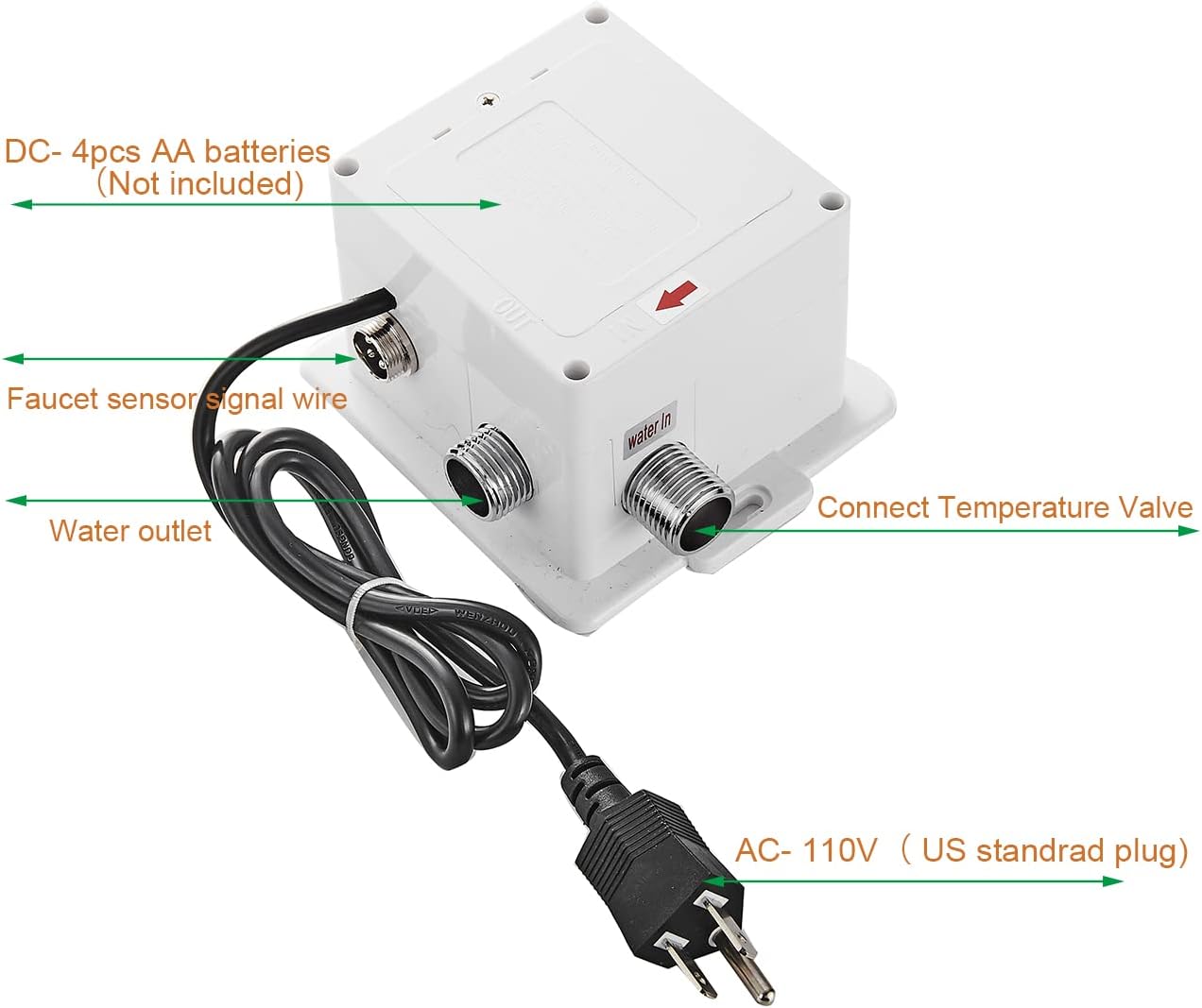
Automatic
$38.99
In stock on Amazon
Check price on AmazonMid-Tier: Adjustable-Range Active IR Sensors
Several mid-to-high-tier units from brands including American Standard, Chicago Faucets, and Sloan offer field-adjustable sensing range via a trim pot or DIP switch in the control box. Coverage in Plumbing & Mechanical Magazine on high-traffic restroom specification calls out adjustable-range sensors as a key differentiator in facilities serving mixed user populations. If your installation includes a variety of sink basin depths or ADA-compliant lowered counters, adjustability is worth the additional unit cost.

Charmingwater
$89.29
In stock on Amazon
Check price on AmazonPremium Tier: Modulated Active IR with Multi-Zone Detection
At the premium tier, select commercial units from manufacturers such as Sloan and T&S Brass incorporate multi-zone sensing — separate near-field and far-field detection regions — which allows the sensor to distinguish a hand at the bowl from incidental movement at the counter edge. Combined with modulated active IR, this configuration produces the lowest spurious-activation rates in the commercial category and is the appropriate specification for high-traffic, mixed-population facilities such as airports, transit stations, and healthcare waiting areas. Per Sensors Magazine (sensorsmag.com) coverage of sensor system design in hygiene applications, modulated multi-zone configurations represent the current performance ceiling for IR-based faucet sensing.
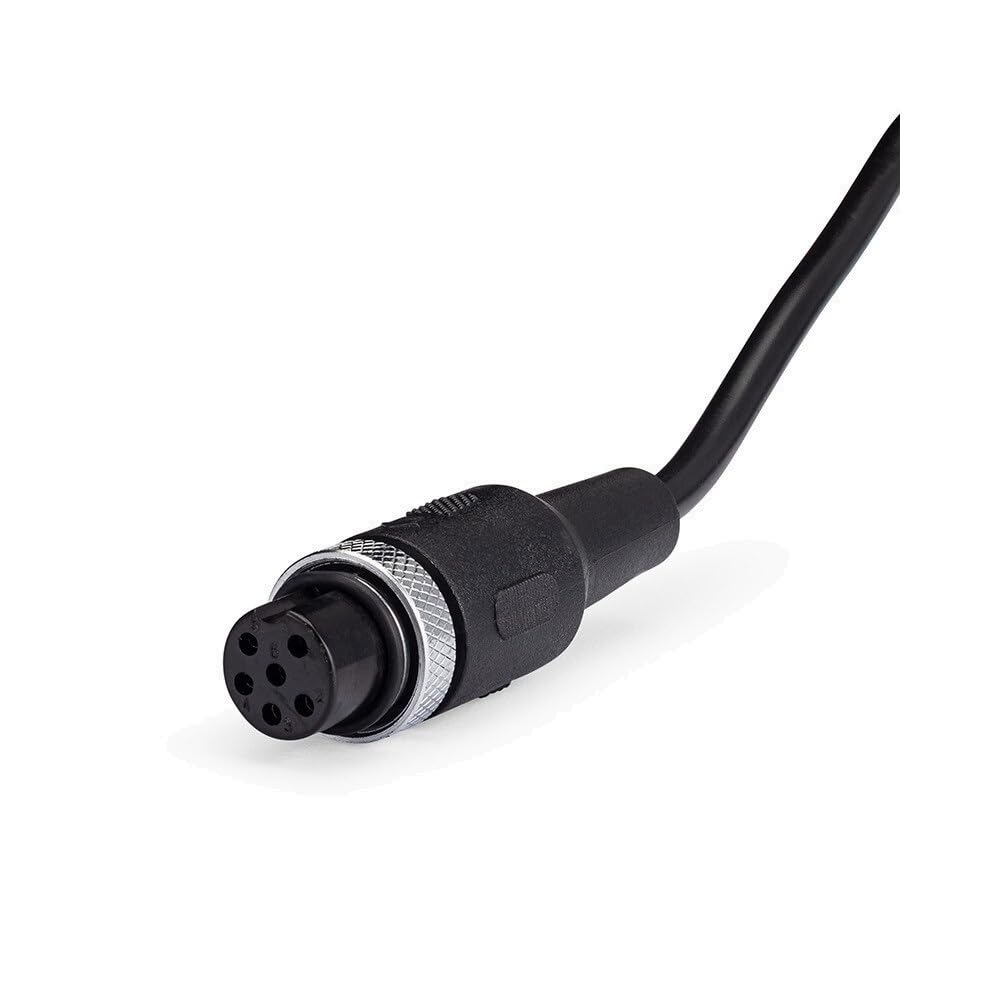
Sloan
$121.45
In stock on Amazon
Check price on AmazonPower Supply Options: AC Hardwire, Battery, and Hybrid Compared
This is the decision that most often gets deferred until rough-in is already complete — and that is where regret lives. Get it into the spec before the plumber pulls permit.
Budget Tier: Battery-Only (4×AA or 2×D-Cell)
Battery-only units dominate the $80–$200 commercial entry and mid tier. They are the right answer when electrical rough-in is not feasible — historic building retrofits, leased spaces where the landlord limits wall penetration, or phased renovations where electrical work is scheduled for a later phase.
Battery life claims from manufacturers range from one to five years. The American Society of Plumbing Engineers’ ASPE Data Book Volume 2: Plumbing Systems notes that real-world longevity in commercial settings with 200 or more activations per day runs closer to 12–24 months for most AA-cell units. D-cell configurations last longer but bulk up the control box. The operational math matters at scale:
By the numbers:
- 50-sink facility, battery units averaging 18-month replacement cycle
- 4×AA per unit at approximately $0.80 per cell = ~$3.20 materials per replacement
- 15 minutes labor per unit at $65/hr = ~$16.25 labor
- Annual facility cost: ~$652 materials +
$2,708 labor = **$3,360/yr**- AC hardwire retrofit at $150 electrical labor per sink × 50 = $7,500 one-time — payback under 2.5 years
Run that math against your specific facility scale before defaulting to battery because the unit cost is lower.
Automatic
$38.99
In stock on Amazon
Check price on AmazonMid-Tier: AC Hardwire (Plug-In or Direct Wire)
A hardwired 120V AC faucet — typically transformer-stepped to 6V DC at the solenoid — eliminates battery replacement labor entirely. In a 50-sink airport restroom, that labor cost is not trivial. Facilities managers consistently report that battery-powered units in high-traffic environments require replacement every 9–18 months per unit, and accessing the battery compartment — often under the sink, requiring tool access — frequently makes the labor cost exceed the battery cost itself.
The downside is installation cost. AC hardwire requires an electrical rough-in at each sink location, which adds electrician time and may require a permit amendment if the original restroom design did not include under-sink receptacles. In a gut renovation, that is a non-issue. In a retrofit where wall cuts are constrained, it is a real limitation.
Spec to check: Confirm the transformer input and output rating matches your solenoid valve’s operating voltage. The most common commercial standard is 6V DC at the solenoid, fed by a 120V AC plug-in transformer. NSF International’s NSF/ANSI 61: Drinking Water System Components — Health Effects certification should appear on any component that contacts the water supply. This is the baseline health-effects compliance document your inspector will request first.
Charmingwater
$89.29
In stock on Amazon
Check price on AmazonPremium Tier: Hybrid AC-Primary with Battery Backup
Several commercial-tier manufacturers — including Sloan and Moen’s commercial line — offer units where 120V AC is the primary source and a battery pack serves as backup during outages. For healthcare, food service, or any facility where restroom availability during a power event is a regulatory or operational requirement, this configuration is worth the 15–20% unit cost premium. The control electronics stay live, the solenoid stays operable, and your maintenance crew is not fielding complaints during a grid event.
Sensors Magazine (sensorsmag.com) coverage of sensor system power architecture in demanding-environment applications notes that hybrid power configurations also stabilize solenoid actuation voltage across the battery-discharge curve — a practical benefit that reduces the erratic sensor response that appears in purely battery-driven units as cells age toward depletion.
Sloan
$121.45
In stock on Amazon
Check price on AmazonBrass Body Construction: What the Alloys Actually Tell You
“Brass body” appears on almost every commercial faucet spec sheet, but not all brass is equivalent, and the differences matter for finish adhesion, corrosion resistance, and lead compliance over the service life.
Budget Tier: Lead-Free Brass with NSF 61 and NSF 372 Compliance
Since EPA enforcement of the Reduction of Lead in Drinking Water Act began in 2014, all faucets sold for potable water use in the United States must contain no more than a weighted average of 0.25% lead across wetted surfaces. Look for explicit NSF/ANSI 61 Section 9 or NSF 372 certification — published by NSF International — on the spec sheet. This is not optional for commercial installations. It is a code requirement, and it is the first compliance document your inspector will request.
Most reputable commercial brands including American Standard, Chicago Faucets, T&S Brass, and Delta Commercial comply as a baseline. Where ambiguity appears is in the $60–$110 tier from import-only brands without U.S. distribution infrastructure. If the spec sheet does not name the certification body and certification number, request it before issuing a purchase order.
Automatic
$38.99
In stock on Amazon
Check price on AmazonMid-Tier: Dezincification-Resistant (DZR) Brass
In water supplies with high chlorine content or aggressive water chemistry — common in municipal systems in the Southwest and parts of the Midwest — standard brass alloys can undergo dezincification, a corrosion process where zinc leaches out of the alloy and leaves a porous copper matrix that eventually fails structurally. DZR brass, typically designated CR or DZR on spec sheets, uses a modified alloy composition that resists this process.
If your facility is in a region with aggressive water chemistry and you are specifying a 10-year service life, DZR should be written explicitly into your specification. T&S Brass and Chicago Faucets both publish alloy callouts in their commercial spec sheets. Reading past the marketing copy into the actual material data section is where this specification lives.
Charmingwater
$89.29
In stock on Amazon
Check price on AmazonPremium Tier: Verified Chrome Plating Thickness Over Nickel Underplate
Commercial-grade chrome plating is typically applied at 0.3–0.5 microns over a nickel underplate. Consumer-tier faucets often run 0.1–0.2 microns, which appears identical at installation but shows visible wear at high-use sinks within 18–24 months. Machine Design (machinedesign.com) coverage of electroplating specifications in industrial hardware notes that nickel underplate adhesion quality — not just chrome thickness — governs long-term finish durability in high-humidity enclosures, which describes a commercial restroom precisely.
If finish longevity is part of your maintenance SLA, ask for the plating specification in writing before finalizing your supplier. Confirm both the chrome thickness and the nickel underplate thickness. It is a reasonable request from any commercial supplier and separates vendors who know their product from those who do not. A minimum of 0.3 microns chrome over a documented nickel underplate is the commercial baseline worth holding to.
Sloan
$121.45
In stock on Amazon
Check price on AmazonDecision Framework: If X, Then Y
If your facility has 20 or more sinks and electrical rough-in is feasible: Specify AC-primary with battery backup. The labor savings on battery replacement justify the electrical cost at scale within 2–3 years, and you gain resilience against power events. Budget $150–$300 per unit in the commercial mid-to-premium tier from suppliers such as Chicago Faucets, Sloan, and American Standard’s commercial line.
If you are retrofitting a leased space with limited wall access: Battery-only is the right answer, but specify D-cell over AA where under-sink space allows. Target units with adjustable IR range and modulated active-IR sensor technology. Do not accept a unit that cannot document its sensing technology type in writing from the manufacturer.
If ADA compliance and mixed user populations are in scope: Prioritize field-adjustable sensing range over a fixed-range unit at any price point. A non-adjustable 3-inch range sensor will generate accessibility complaints in a facility serving wheelchair users or children. Plumbing & Mechanical Magazine’s 2024 coverage of high-traffic restroom specification explicitly calls out adjustable-range sensors as necessary in facilities with mixed population needs.
If water chemistry in your municipality runs aggressive — high chlorine or low pH: Specify DZR brass explicitly and confirm it in writing from your distributor. Chicago Faucets and T&S Brass both publish alloy data on request. Hold all suppliers to the same documentation standard regardless of brand reputation.
If finish longevity is part of your maintenance SLA: Ask for chrome plating thickness specification before finalizing. A minimum of 0.3 microns over nickel underplate is the commercial baseline, per electroplating specification coverage in Machine Design (machinedesign.com). Anything below that threshold should be priced accordingly and replaced on a shorter maintenance cycle.
If you are sourcing through a distributor such as Grainger or Ferguson: Cross-reference the exact SKU against the manufacturer’s current NSF 61 or NSF 372 compliance documentation, as noted by NSF International’s published certification standards. Distributor listings occasionally lag behind product revisions, and a compliance certificate tied to a superseded SKU does not protect you at inspection.
The sensor range, power supply, and body specification decisions for a commercial touchless faucet are not glamorous engineering problems, but they are the ones that generate the most callbacks, warranty disputes, and maintenance budget overruns when they are underspecified at the front end. Get those three parameters locked in writing — sensing technology type, power configuration, and alloy and plating certification — before the rough-in closes, and most of the downstream friction disappears.