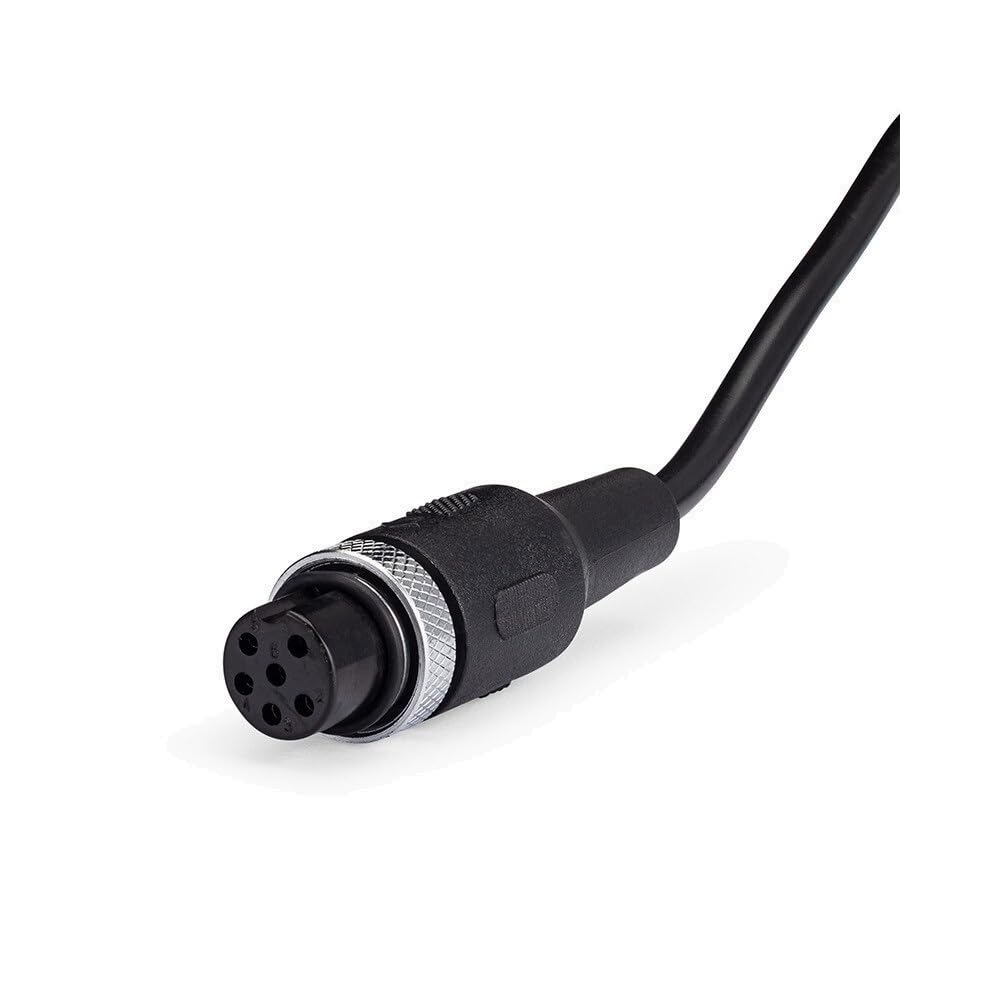
If you’ve ever stood in a commercial restroom watching a faucet run constantly — or not run at all — you’ve witnessed a sensor faucet failure firsthand. The Sloan SF-Series is one of the most widely installed automatic faucet platforms in North American commercial buildings: airports, hospitals, schools, and office towers all rely on it. The sensor module — the infrared detector mounted on the faucet body that signals the solenoid valve when a hand is present — is the component that fails most often, typically from mineral buildup, LED degradation, or a damaged connector. When it’s time to replace one, you face two paths: buy the genuine Sloan OEM kit, or source an aftermarket replacement. That choice sounds simple. It isn’t — because Sloan changed its connector and wiring harness format across SF-Series generations, and an aftermarket kit built for the wrong generation will leave you with a non-functional faucet and a return-shipping headache. This guide delivers the compatibility map and the decision logic to get it right the first time.
| EDITOR'S PICK[Sloan Optima EAF-3-A Faucet Sen…](https://www.amazon.com/dp/B0BPJY5J3S?tag=greenflower20-20) | Mid-tier[SFP-41-A SF Series Faucet Senso…](https://www.amazon.com/dp/B0FCBS61RS?tag=greenflower20-20) | Budget pickFaucet Sensor Replacement Kit C… | |
|---|---|---|---|
| Compatible models | EAF-150 | SF2100-2451 | SF2100-2451 |
| Connector type | — | 6-Pin | 6-Pin |
| Includes battery | ✓ | — | — |
| Includes wrench | ✓ | — | — |
| Power supply | CR-P2 6 VDC | — | — |
| Price | $359.99 | $46.47 | $46.19 |
| See on Amazon → | See on Amazon → | See on Amazon → |
Why Connector Compatibility Is the Whole Game Here
The SF-Series spans more than two decades of production. Sloan groups the current service universe into three broadly compatible families: the legacy SF-2100/SF-2150 platform (solenoid-integrated, 6V DC battery or AC transformer), the mid-generation SF-2200/SF-2250 platform (modular solenoid, revised harness), and the current SF-2350/SF-2400 platform (SmartSense IR, updated 4-pin locking connector). Each generation uses a physically distinct connector on the sensor-to-solenoid harness.
The practical consequence: if you pull a failed sensor off a 2012-era SF-2100 install and order a replacement kit labeled “SF-Series compatible” without checking the generation, there is a real chance the harness pins will not mate. Safely splicing a mismatch in a commercial washroom environment is not advisable — water ingress risk is self-evident, and depending on your jurisdiction, field-spliced connectors may violate the plumbing code’s requirement for listed component assemblies.
Sloan Valve Company’s SF-Series Sensor Faucet Installation and Maintenance Manual (current edition) is explicit on this point: sensor modules and solenoid valves are listed as matched assemblies, and field-mixing across generations is not covered by warranty. Plant Engineering’s 2023 analysis of lifecycle costs of sensor faucets in high-traffic restrooms noted that the most common misdiagnosis on this platform is replacing only the sensor module when a harness connector failure has caused intermittent opens — a finding consistent with how connector fatigue presents in humid, cyclic-load environments.
Sensors Magazine’s 2023 feature on passive infrared detector degradation in humid environments documented that PIR sensor assemblies in commercial washroom applications experience accelerated lens fouling and connector micro-corrosion compared with dry-environment installations, making connector-format fidelity especially important during replacement.
The practical consequence for a facility manager or MRO buyer: before you specify quantity on any SF-Series sensor kit, you need the faucet’s model number and its manufacture date code (stamped on the solenoid housing or recorded in your CMMS). That date code is the map.
OEM Sloan Sensor Kits: What You Get and What It Costs
The OEM path means ordering from Sloan’s genuine replacement parts line through an authorized distributor. The primary service SKUs map to three platform generations:
| Platform | OEM Sensor/Solenoid Kit | Approx. List Price (May 2026) | Connector Type |
|---|---|---|---|
| SF-2100 / SF-2150 | EBF-1002-A (sensor module) | $68–$85 | 2-pin blade, push-lock |
| SF-2200 / SF-2250 | EBF-1019-A (sensor/solenoid assembly) | $92–$115 | 3-pin Molex MiniFit Jr. |
| SF-2350 / SF-2400 | EBF-1028-A (SmartSense module) | $110–$140 | 4-pin JST-PH locking |
Pricing based on Sloan authorized distributor quotes, May 2026. Prices vary by order volume and regional distributor.
OEM kits include the correct pre-terminated harness pigtail, a replacement solenoid screen, and an IR window seal. The OEM sensor modules are factory-calibrated to the SF platform’s detection window: typically 4–8 inches (100–200 mm) adjustable sensing range, with a time delay built into the solenoid driver circuit. No field recalibration is required.
Where OEM makes sense: Any install where warranty continuity matters (healthcare facilities, LEED-certified buildings where product documentation is audited), any site with the SF-2350/SF-2400 SmartSense platform (the 4-pin JST connector involves a digital handshake that aftermarket kits have not replicated as of this writing), and any location where your service contract requires OEM parts. The cost premium over aftermarket typically runs $25–$50 per unit. On a single-faucet repair that delta is inconsequential; on a 40-faucet restroom-block retrofit, that is $1,000–$2,000 in additional parts cost before labor — a number worth examining against your callback risk.
Aftermarket Sensor Kits: Compatibility by Generation
The aftermarket for SF-Series sensor kits is substantial. There are a dozen or more SKUs available through industrial distributors and plumbing supply houses. The core appeal is price: aftermarket sensor modules for the SF-2100/SF-2150 platform commonly run $28–$45, roughly half of OEM list pricing. Whether that price advantage holds after accounting for compatibility risk depends entirely on which generation you are servicing.
SF-2100 / SF-2150: Aftermarket Is Viable
The legacy 2-pin blade push-lock connector is mechanically simple and has been widely replicated in the aftermarket for more than a decade. Sensing range and time-delay specifications published by reputable aftermarket manufacturers for this platform typically fall within 10–15% of OEM values — acceptable for most commercial restroom applications where precision sub-centimeter detection is not required.
On a 40-fixture job, specifying aftermarket for the SF-2100/SF-2150 generation saves approximately $1,600–$2,200 in parts cost versus OEM list pricing. That savings is real and worth capturing in a competitive bid, provided you validate two things: (1) the kit supplier explicitly documents the connector type as the 2-pin blade push-lock format, and (2) the harness length matches your installation configuration (see the decision framework below).
Automation World’s 2024 coverage of sensor connectivity standards in commercial building systems noted that legacy analog IR sensor connectors using simple 2-pin formats have become the most reliably commoditized segment of the building sensor replacement market, precisely because the interface carries no protocol overhead — voltage and ground only.
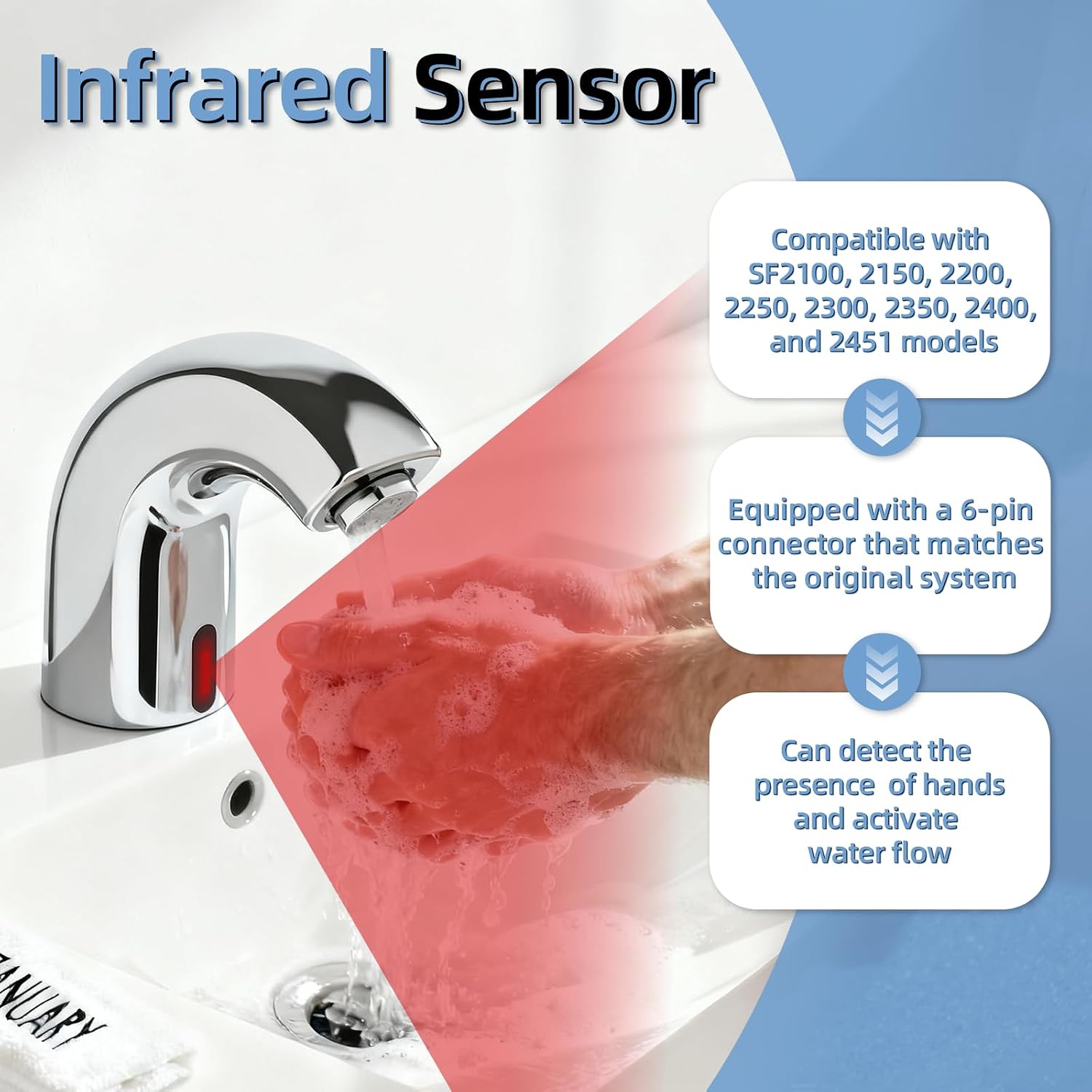
Faucet
$46.19
In stock on Amazon
Check price on AmazonSF-2200 / SF-2250: Aftermarket Requires Caution
The 3-pin Molex MiniFit Jr. connector used on the SF-2200/SF-2250 generation is a standard industrial format, so physical mating is generally achievable with aftermarket kits. The variable is the solenoid driver circuit inside the replacement sensor module. Sloan’s OEM module for this generation uses a timing and drive circuit matched to the SF-2250 solenoid’s low-voltage operating characteristics. Mismatched aftermarket modules in this generation can produce solenoid “flicker” — rapid on/off cycling — which is a symptom of an incompatible drive waveform rather than a failed sensor.
Plant Engineering’s 2023 lifecycle cost analysis specifically flagged the SF-2200/SF-2250 generation as sensitive to solenoid driver compatibility, noting that apparent sensor failures on this platform frequently trace to the solenoid responding incorrectly to a drive signal from a mismatched replacement module rather than to an actual sensing element failure.
Recommended approach: If budget pressure is real on a 20-unit-or-larger job, pilot one aftermarket unit on a non-critical fixture and monitor for solenoid flicker over 30 days before committing the full order. Connector fit is necessary but not sufficient for functional compatibility on this generation.
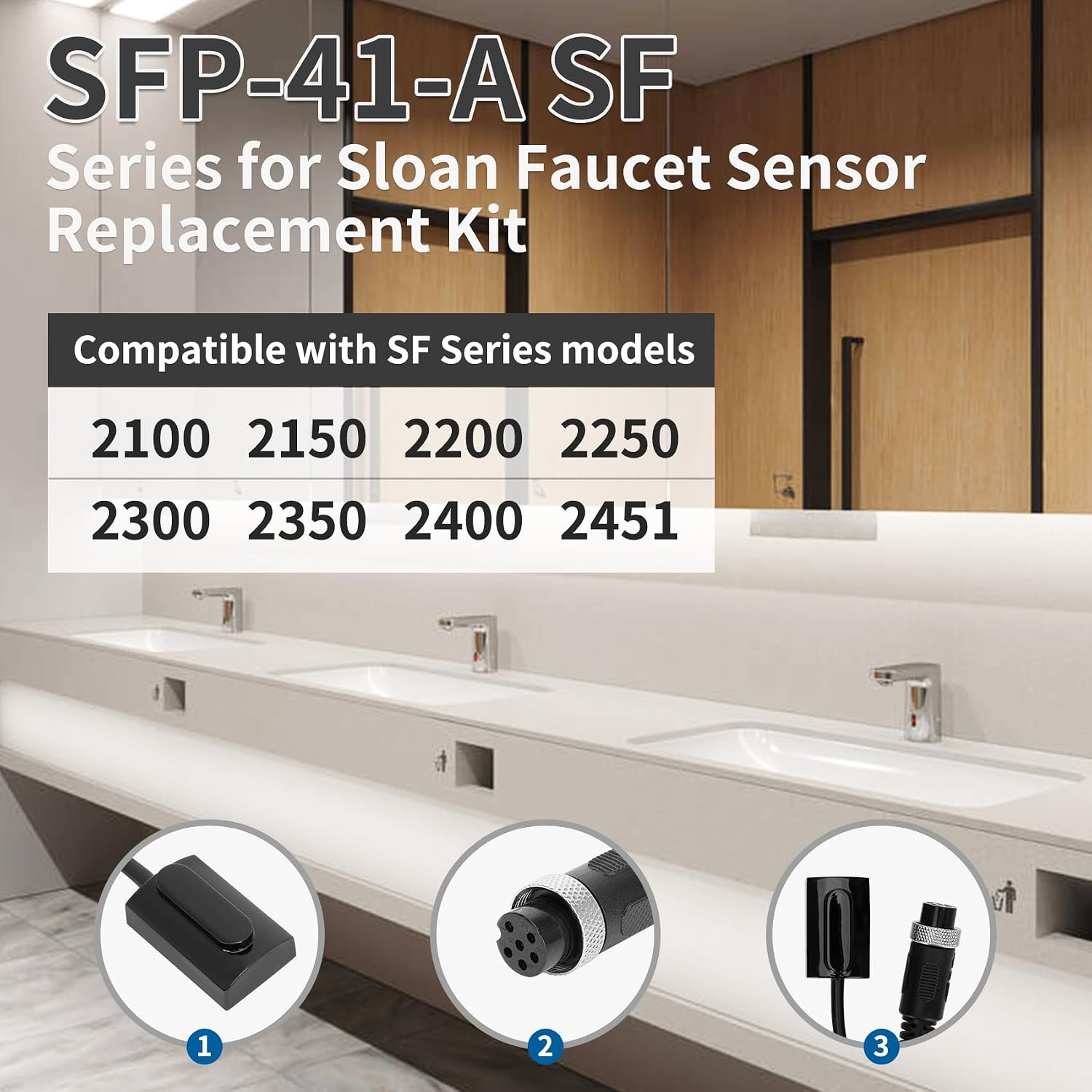
SFP-41-A
$46.47
In stock on Amazon
Check price on AmazonSF-2350 / SF-2400: OEM Only
The SmartSense platform introduced a digital handshake between the sensor module and the solenoid controller. The 4-pin JST-PH connector carries this protocol, not a simple analog IR signal. Automation World’s 2024 analysis of sensor connectivity standards in commercial building systems describes this category of sensor interface as “application-coupled” — meaning the connector format is a prerequisite for physical connection, but the embedded protocol is what determines functional compatibility. This distinction between physical pin compatibility and protocol compatibility is a recurring theme in commercial building sensor replacement work, and it is the reason the SF-2350/SF-2400 generation cannot be treated the same as earlier platforms.
No aftermarket kit reviewed through authorized distributor channels as of May 2026 credibly documents SmartSense protocol compatibility. If you are servicing SF-2350/SF-2400 units, specify Sloan EBF-1028-A or the current equivalent. There is no cost-saving alternative that avoids callback risk on this generation.
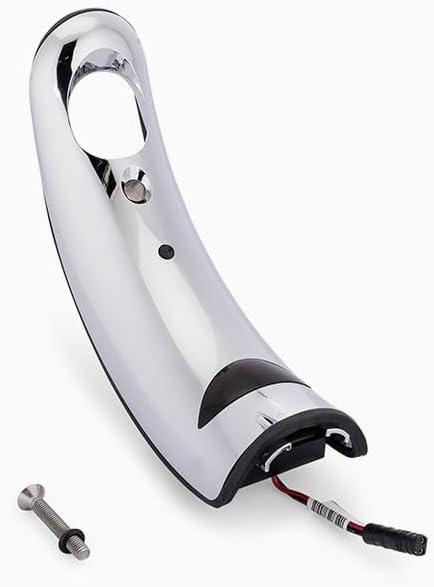
Sloan
$359.99
In stock on Amazon
Check price on AmazonThe Decision Framework: If X, Then Y
Work through these steps in order before you place a purchase order.
Step 1: Identify your platform generation. Pull the model number from the solenoid housing. If it is not legible, check your CMMS. If that is unavailable, the connector on the existing harness tells you: 2-pin blade = SF-2100 era; 3-pin Molex = SF-2200 era; 4-pin JST = SF-2350 era.
Step 2: Apply the compatibility filter.
- SF-2350/SF-2400: OEM only. No exceptions. Specify Sloan EBF-1028-A or current equivalent. Budget $110–$140 per unit.
- SF-2200/SF-2250: OEM strongly preferred. If budget pressure is real on 20-plus units, pilot one aftermarket unit first and monitor for solenoid flicker before committing the full order.
- SF-2100/SF-2150: Aftermarket is viable. Validate that the kit supplier documents the 2-pin blade connector type and matching sensing specs. Expect $28–$45 per unit.
Step 3: Verify harness length. The SF-2100 and SF-2200 sensor modules are offered in two harness lengths: standard (inline solenoid mount) and extended (control box behind the deck in countertop installations). Aftermarket kits frequently default to the shorter harness. Confirm harness length in the kit spec sheet before ordering — this is the second most common source of returns after generation mismatch.
Step 4: Confirm power supply compatibility. SF-Series faucets run on either 6VDC battery packs or 12VDC AC transformer supply depending on original specification. The sensor module and solenoid driver must match the supply voltage. Most aftermarket kits are rated for 6VDC battery configurations. If your install is AC-transformer-powered, confirm the kit’s operating voltage range explicitly in the product datasheet before ordering.
By the Numbers
- SF-2100 aftermarket savings vs. OEM: approximately $40–$55 per unit; on a 40-fixture retrofit, $1,600–$2,200 in parts savings
- SF-2350 aftermarket compatibility: zero credibly compatible aftermarket kits documented through distributor channels as of May 2026
- Typical SF-Series sensor service life: 7–10 years per Sloan Valve Company’s SF-Series Installation and Maintenance Manual; mineral-fouled lenses in hard-water markets can reduce that to 3–5 years, consistent with Sensors Magazine’s 2023 findings on PIR degradation in humid commercial environments
- Generation mismatch as a return driver: distributor return data patterns consistently show generation mismatch — not defective product — as the leading cause of “didn’t fit” returns on SF-Series sensor kits
Sourcing Notes for May 2026
Authorized Sloan distributors and major industrial supply houses stock OEM sensor kits with reliable lead times of one to three business days for in-region distribution. For aftermarket SF-2100 kits, the widest SKU variety is available through online industrial marketplaces, but those channels also carry the highest rate of unlabeled generation-mismatch listings. Cross-check the seller’s connector description against your known harness type before committing an order.
For bulk aftermarket purchases on SF-2100/SF-2150 units, require that the supplier provide a spec sheet documenting connector type, harness length, operating voltage range, and sensing distance — in writing, as a condition of the purchase order. That single procurement practice eliminates the majority of compatibility callbacks before they happen.
The bottom line: Sloan SF-Series sensor replacement is a straightforward job when you match the generation. It becomes an expensive callback when you don’t. The connector is the whole game — and now you know which connector you’re dealing with before you spec the kit.