An outdoor motion-activated security light is exactly what it sounds like: a floodlight mounted outside your building that turns on automatically when its built-in PIR sensor — Passive Infrared, a detector that reads the heat signature of a moving person or vehicle — picks up movement in its field of view. Simple concept, but the purchasing decision gets complicated fast once you realize that “IP65-rated,” “dual-head,” and “5,000-lumen output” can all be technically true on two competing fixtures that perform very differently in your actual installation. If you are specifying these for a commercial parking structure, a warehouse loading dock, or a multi-unit residential property, getting the wrong unit means nuisance callbacks, dark zones in your coverage map, and a fixture that starts corroding in its second winter. This guide gives you a parametric comparison framework organized by installation tier — budget, mid-range, and premium — so you can match spec to site without guesswork.
What IP65 Actually Buys You — and What It Does Not
IP ratings are defined in IEC 60529, published by the International Electrotechnical Commission under the title Degrees of Protection Provided by Enclosures (IP Code). The two digits encode two separate test results: the first digit (6) means the enclosure is fully dust-tight; the second digit (5) means it withstands a sustained low-pressure water jet from any direction. What IP65 does not cover is submersion, high-pressure washing, or UV-induced seal degradation over time — none of those conditions appear in the IEC 60529 test protocol.
For outdoor security lights, the practical implications are as follows:
- IP65 is the minimum you should accept for any exposed exterior mounting — eave, pole, or wall bracket. Dust ingress at IP5X and below becomes a real problem in agricultural, construction, or coastal environments where airborne particulates are constant.
- IP66 raises the water-jet pressure threshold. If your fixture sits under a roofline overhang where it is never directly rained on, IP65 is fine. If it is pole-mounted in an open yard, IP66 buys meaningful margin against sideways rain and pressure-washer maintenance cycles.
- IP67 and IP68 (short-term or continuous submersion) are rarely necessary for a wall- or pole-mounted floodlight. The exception: recessed grade-level fixtures or units in flood-prone loading dock sumps.
One nuance that product listings often obscure: the IP rating applies to the luminaire body but may not extend to the conduit entry point, junction box, or driver module if it is housed separately. Per Underwriters Laboratories’ UL 1598 Luminaire Standard, the tested enclosure must be evaluated as a complete assembly at its rated configuration. A fixture that is IP65 with the supplied strain-relief gland installed may drop to a lower protection class if you substitute a different conduit fitting. Verify this against the manufacturer’s installation drawing before specifying a unit into a wet-location conduit run.
Dual-Head Geometry: Coverage Zone Math You Actually Need
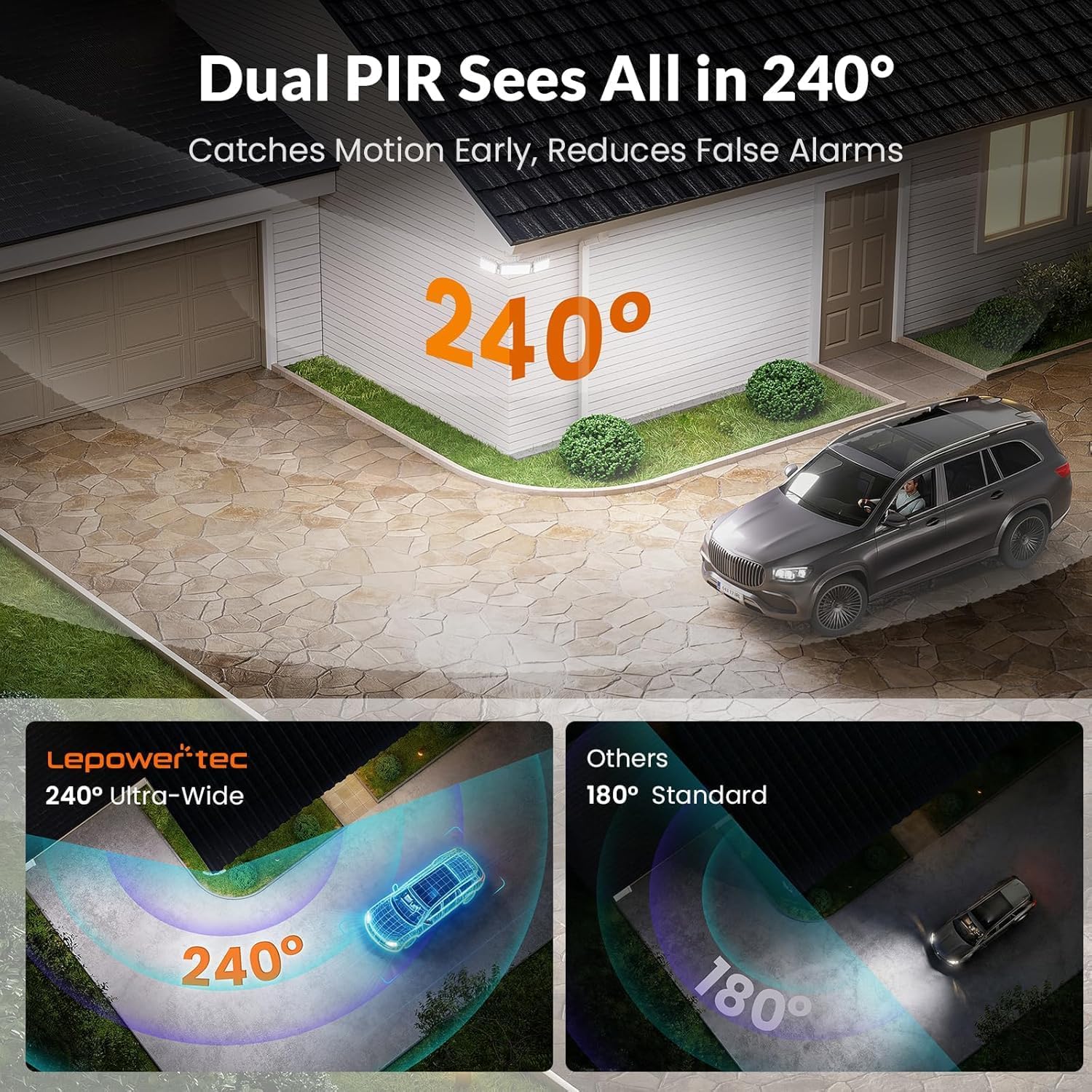
“Dual-head” means two independently adjustable lamp heads on a shared mounting bracket, typically sharing a single PIR sensor — though premium units increasingly provide a separate PIR detector per head, or a wide-angle sensor mounted between the two heads at a fixed central point.
The coverage geometry tradeoff is real and worth modeling before you commit. A single-head fixture with a 180-degree PIR sweep covers roughly a 15 m × 15 m detection zone at 2.5 m mounting height under manufacturer typical-use specs for standard residential-grade sensors. A dual-head fixture at the same height, with heads aimed 45 degrees apart, can cover a combined illumination footprint of roughly 6 m × 20 m — better for long driveways or perimeter fence lines. A dual-head with a wide-angle 270-degree PIR covers roughly 20 m × 20 m detection, useful for corner-mounted applications.
The decision rule: if your coverage zone is roughly square or semicircular — a garage apron, a building entrance — a single-head unit with a wide PIR angle is usually more efficient and less expensive. If your zone is long and narrow — a fence line, a loading dock run, a parking aisle — dual-head wins because you can aim each head independently along the axis without fighting the sensor’s detection geometry.
One persistent spec trap: some manufacturers publish detection range at the PIR’s maximum sensitivity setting, which may trigger on ambient thermal events such as HVAC exhaust, vehicle engine heat at distance, or sun-warmed pavement, causing nuisance trips. Look for units that publish detection range at a middle or adjustable sensitivity setting and that include a lux threshold adjustment so the light only activates in darkness, not just on motion.
Lumen Output by Tier: What the Numbers Mean in the Field
Lumen output — the total quantity of light emitted by the fixture — is the spec most buyers focus on and also the one most easily inflated in marketing copy. The Illuminating Engineering Society’s IES RP-8-18 Roadway Lighting Standard identifies 5 to 10 foot-candles (roughly 54 to 108 lux) as appropriate for active pedestrian areas and parking facilities. Converting backwards: to achieve 10 foot-candles at ground level from a fixture mounted at 3 m, you need roughly 3,500 to 5,000 lumens from the fixture, accounting for beam spread and the surface reflectance of a typical asphalt lot.
The DesignLights Consortium’s DLC Technical Requirements v5.1 sets minimum efficacy thresholds for commercial LED luminaires at 100 lumens per watt for standard classification and 140-plus lumens per watt for premium classification. DLC listing is a reliable proxy for quality because it requires third-party photometric testing, which catches manufacturers who inflate lumen claims. The ENERGY STAR Luminaires Program Requirements v2.2, published by the U.S. EPA, adds a durability filter: ENERGY STAR luminaires must maintain at least 70 percent of initial lumen output (L70) after 25,000 hours of operation — for a security light running four hours per night on average, that represents roughly 17 years of service life.
The three tiers below reflect real-world installation categories, not arbitrary price buckets.
Budget Tier: Residential Entry Points and Small Gates
Lumen range: 1,500–3,000 lumens Wattage: 20–30 W LED Typical retail price: $25–$55 IP requirement: IP65 minimum
At this tier, the fixture is sized for a front door step, a small side gate, or a single-car garage apron. Detection zone depth of 8–12 m is generally sufficient. Most units at this price point are single-head with a 180-degree PIR. Quality control varies widely; without DLC listing, apply a mental lumen discount of 10 to 20 percent to the published figure, a pattern consistently noted in aggregated product reviews published by sources including Wirecutter. Adjustability is limited — typically one swivel axis on the head — and driver thermal management is handled by a plastic-backed housing that will degrade faster in sustained heat. Acceptable for low-duty-cycle residential use; not appropriate for commercial applications.
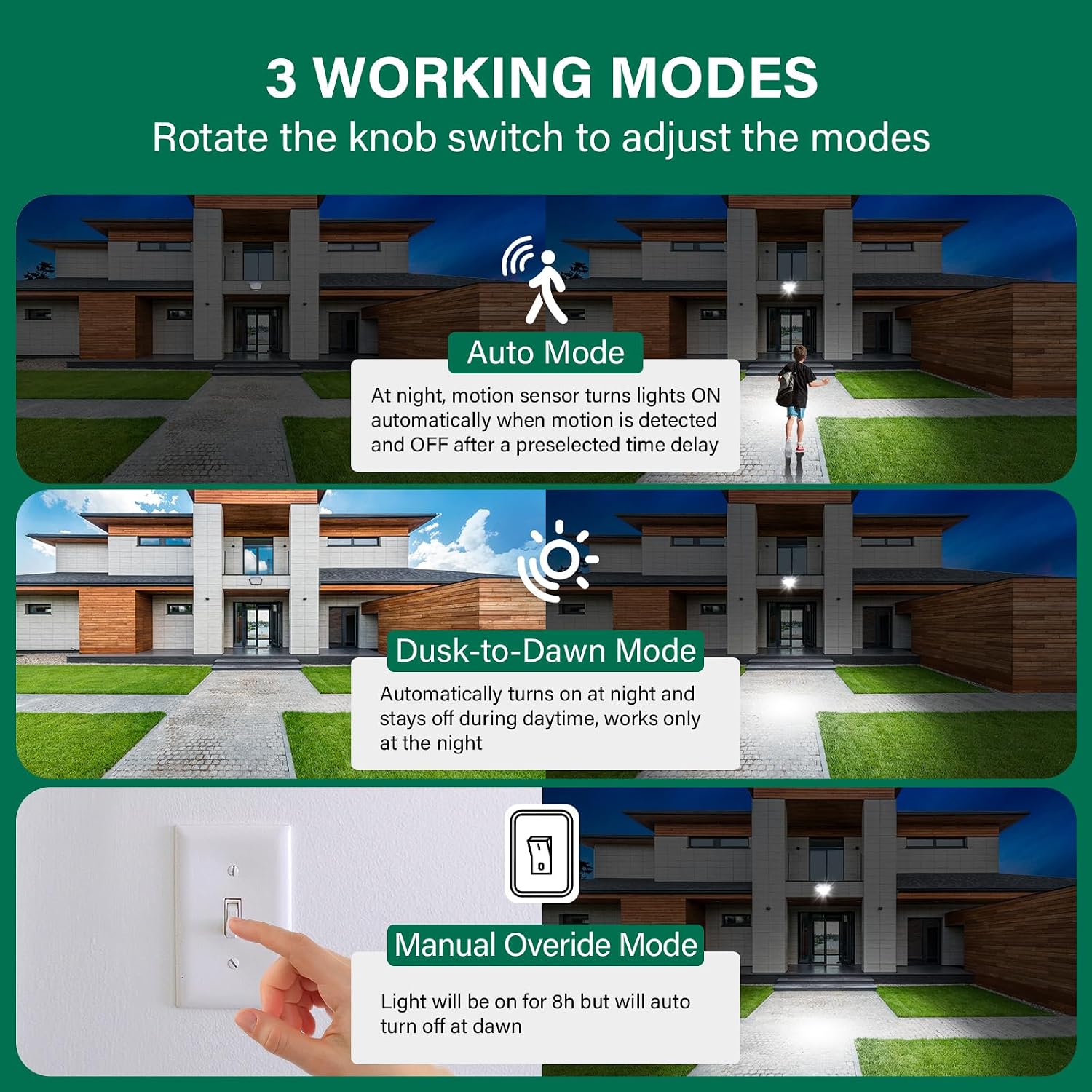
240-Degree
$11.89
In stock on Amazon
Check price on AmazonMid-Tier: Dual-Head Residential and Light Commercial
Lumen range: 3,000–8,000 lumens Wattage: 30–80 W LED Typical retail price: $55–$150 IP requirement: IP65–IP66
This is where most professionally installed residential and light commercial projects land. Dual-head geometry covers driveways, fence lines, and service entrances effectively in this lumen range. At 5,000 lumens from a dual-head fixture mounted at 3 m, you can reliably achieve the IES RP-8-18 threshold of 5 foot-candles across a 12 m × 6 m parking bay. Look for units with adjustable on-time delay (30 seconds to 10-plus minutes), selectable sensitivity, and a lux threshold control. DLC standard listing is achievable at this price point and worth requiring. Die-cast aluminum head construction is common at the upper end of this range; plastic brackets with multiple swivel joints appear at the lower end and are the primary failure mode flagged in long-term owner reports aggregated by reviewers at Apartment Therapy and similar residential-focused outlets.
Olafus
$37.98
In stock on Amazon
Check price on AmazonPremium Tier: Commercial Parking, Loading Docks, and Industrial Yards
Lumen range: 8,000–15,000+ lumens Wattage: 80–150 W LED Typical retail price: $100–$400 IP requirement: IP66 minimum; IP67 for grade-level or flood-prone installations
At this tier, DLC Premium classification should be a hard requirement. Per the DLC Technical Requirements v5.1, Premium-classified fixtures must exceed 140 lm/W efficacy and pass more stringent lumen maintenance testing — meaningful at the duty cycles commercial fixtures accumulate. Cast-aluminum housing with integrated heat-sink fins thermally coupled to the driver module is the construction standard; fixtures where the driver is isolated in a plastic compartment show markedly higher failure rates under sustained operation, a point reinforced in thermal management coverage published by Machine Design and Electronic Design. For any installation where security cameras depend on the fixture for usable footage, specify 5,000–6,500 K color temperature (daylight spectrum), which aligns with the optimal range for most IP camera image sensors. Units in this tier require hardwired installation on a dedicated 20 A circuit by a licensed electrician. In coastal or agricultural environments with sustained salt air or airborne particulates, specify marine-grade or powder-coated aluminum housing and use stainless or hot-dip galvanized mounting hardware regardless of what ships in the box — galvanic corrosion at the mounting interface is a documented long-term failure mode in these conditions.
328ft
$39.99
In stock on Amazon
Check price on AmazonFour Spec Decisions That Separate Good Installs from Callbacks
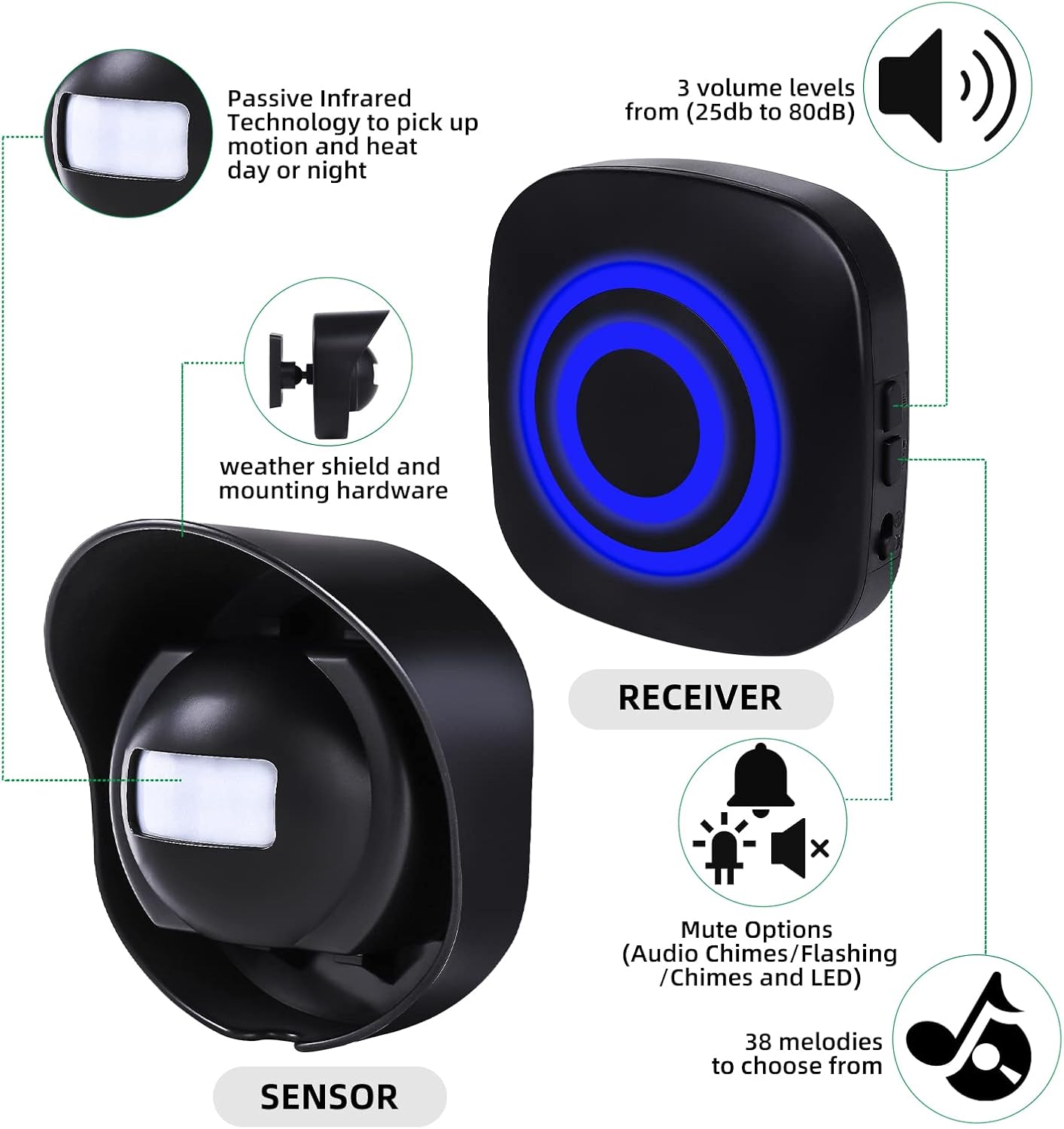
Mounting height and sensor design: PIR sensors on most security lights are calibrated for 2–4 m mounting height. Above 4 m, the detection cone shortens and sensitivity drops. For pole mounts above 5 m, look for units explicitly rated for high-mount use or pair the fixture with a separate high-mount PIR module — several commercial controls manufacturers including Lutron and Leviton produce these for retrofit applications.
Adjustability versus reliability: More adjustable joints mean more water ingress and mechanical loosening failure points over time. A die-cast aluminum head locked at a fixed angle with stainless fasteners will outlast a five-axis adjustable plastic bracket across multiple winters, even if it offers less flexibility on install day.
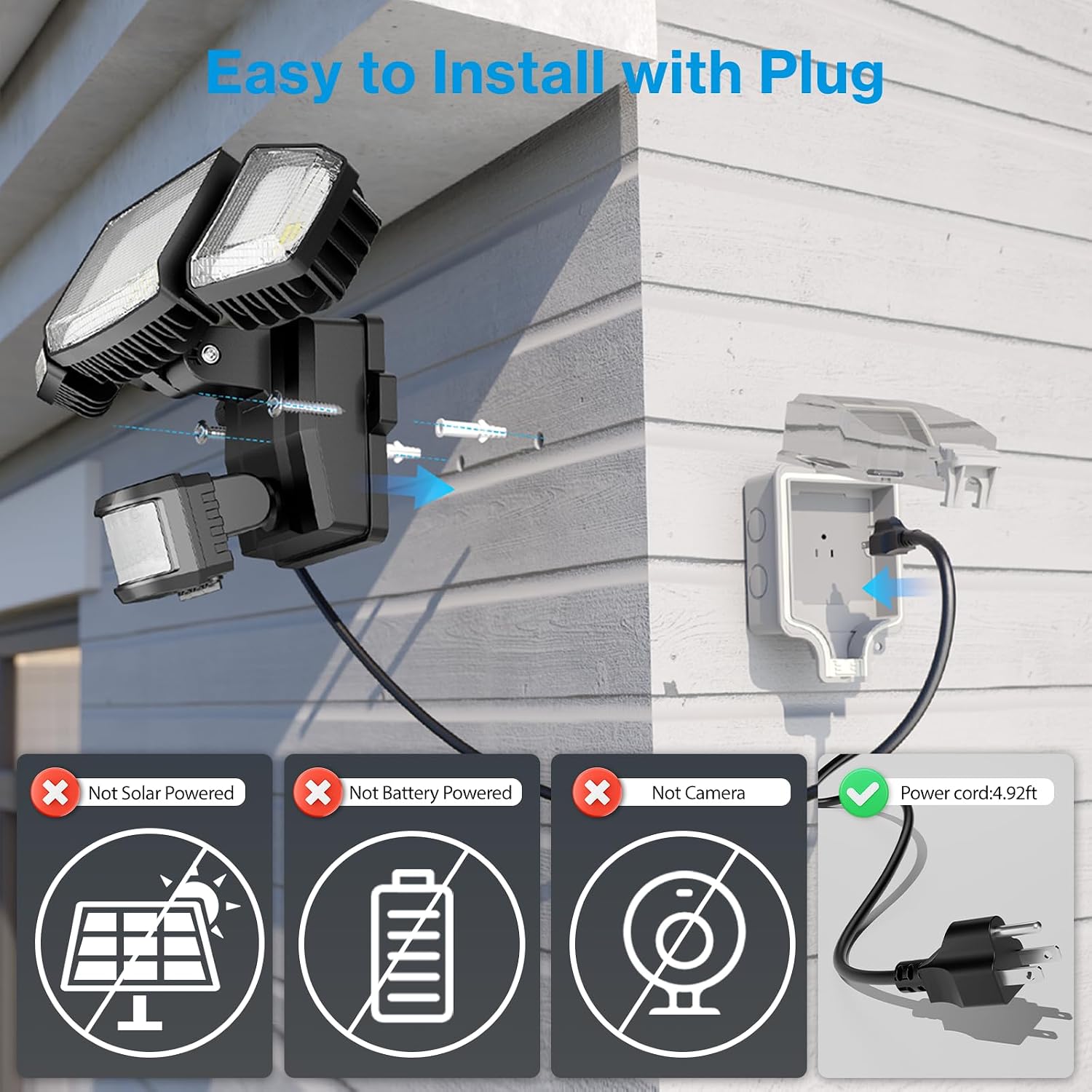
On-time and sensitivity controls: A fixture with only a fixed 5-minute on-time is a nuisance in pedestrian-heavy areas and a liability in facilities where workers need sustained illumination during an operation. Adjustable time-delay (30 seconds to 10-plus minutes) and a full-night-on security mode override are common in the $60-and-above bracket and rare below it.
Driver thermal management: LED drivers fail from heat accumulation, not from light-hours. Look for visible heat-sink fin geometry on the back of the driver housing in product photography. A flat plastic panel on the back of the unit is a reliable signal of inadequate thermal design, a principle covered in depth in LED driver engineering coverage from sources including Plant Engineering and Design News.
Decision Rules in Plain Language
- Square or semicircular zone, residential mounting height: Single-head, 3,000–5,000 lumens, IP65, adjustable sensitivity and time delay. Dual-head adds cost without benefit.
- Long narrow zone — driveway, fence line, parking aisle: Dual-head, 5,000–8,000 lumens, IP65 minimum, independent head aim adjustment, DLC standard listing preferred.
- Commercial or industrial exterior: DLC Premium required, IP66 minimum, cast-aluminum housing with integrated heat-sink fins, 10,000-plus lumens, hardwired dedicated circuit.
- Security camera in the system: 5,000–6,500 K color temperature; warm-white fixtures degrade camera footage quality at range.
- Coastal or agricultural environment: IP66 minimum, marine-grade or powder-coated aluminum housing, stainless or hot-dip galvanized mounting hardware throughout.
The spec work is not glamorous, but it is what separates a fixture still operating in year five from a warranty claim in year two. Run the geometry against your actual zone shape, check the DLC database for verified lumen output, and match the IP rating to your real installation environment — not just the minimum the product listing claims.