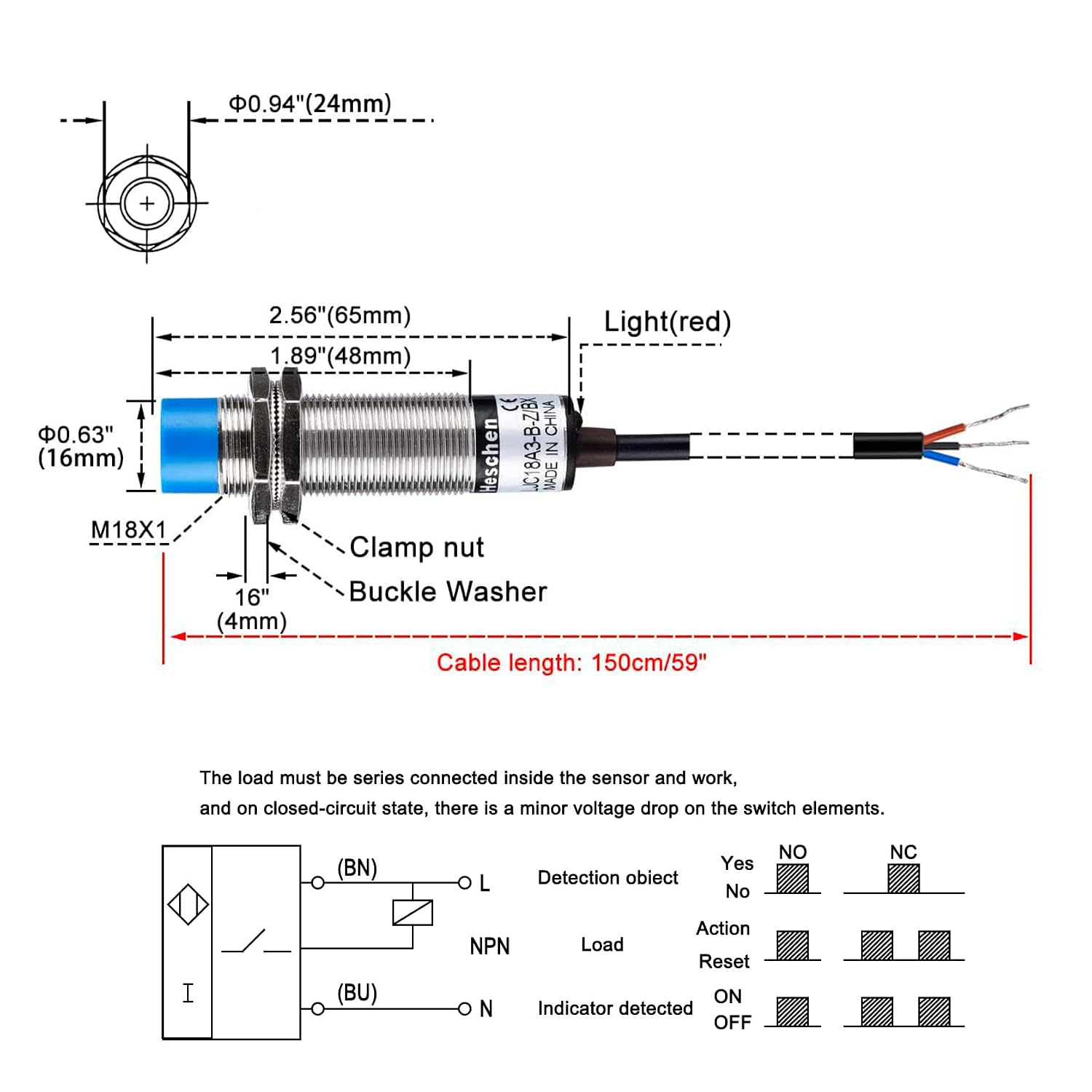
If you have ever grabbed what looked like the right sensor off the shelf — same thread size, same voltage range, same sensing distance — and then spent an hour troubleshooting why the PLC input refuses to trigger, NPN versus PNP output logic is almost certainly the culprit. An inductive proximity sensor (a device that detects metal objects without physical contact, using an oscillating electromagnetic field) does its job reliably. The part that bites you is how the sensor reports that detection to your controller. NPN and PNP describe the direction current flows through the sensor’s output transistor when it switches: NPN pulls the signal wire toward 0 V (common ground), while PNP pushes it toward the supply voltage. Match the wrong type to your PLC’s input card and you get nothing — or worse, a false constant-ON state that masks real faults. This guide explains the wiring logic in plain terms, shows you where the math matters, and ends with a clear decision rule for picking between M12 and M18 form factors and between the major catalog brands.
| EDITOR'S PICKInductive Proximity Sensor SN04… | Mid-tierHeschen M18 Capacitive Proximit… | Budget pickHeschen M18 Inductive Proximity… | |
|---|---|---|---|
| Technology | Inductive | Capacitive | Inductive |
| Housing size | — | M18 | M18 |
| Normally open | ✓ | ✗ | ✓ |
| Detection range | — | 10mm | 8mm |
| Wires | — | 3 | 3 |
| Price | $14.49 | $9.29 | $7.49 |
| See on Amazon → | See on Amazon → | See on Amazon → |
The Core Switching Logic: Why Current Direction Is Everything
Think of NPN and PNP as describing which rail of the power supply the output transistor connects to when it activates.
NPN (also called “sinking” or “current-sinking”): When the sensor detects a target, the output transistor connects the signal wire to the 0 V (negative) rail. The load — your PLC input — sits between the +V supply and the sensor output. Current flows into the sensor’s output terminal. The PLC input card must be wired to source current (i.e., the input card provides +V to the circuit) for NPN sensors to work. This is the dominant standard in Japanese PLC ecosystems (Mitsubishi, Omron, Keyence controllers) and in much of Asian manufacturing.
PNP (also called “sourcing” or “current-sourcing”): When the sensor detects a target, the output transistor connects the signal wire to the +V (positive) rail. Current flows out of the sensor’s output terminal toward the load. The PLC input card must sink that current to 0 V. PNP is the default in European and North American installations — Siemens, Allen-Bradley/Rockwell, Schneider Electric, and most Beckhoff I/O modules expect PNP sensors on their standard digital input cards without any configuration jumpers.
The mismatch failure mode: Connecting a PNP sensor to a sinking-input PLC card typically results in no signal — the logic level never reaches the input threshold. Connecting an NPN sensor to a sourcing-input card can produce a permanent ON state because the input sees 0 V as its active level even without a target present. Neither failure is obvious at a glance. Automation World, in coverage of commissioning best practices (automationworld.com), has noted that output polarity compatibility is among the most frequently overlooked sensor selection criteria, ranking ahead of sensing distance and housing style as a source of field commissioning errors. Omron Industrial Automation’s “Proximity Sensors — Principles and Selection Guide” technical reference document specifically flags output polarity as the first compatibility checkpoint before any other parameter is evaluated.
By the Numbers
| Parameter | Typical NPN Sensor | Typical PNP Sensor |
|---|---|---|
| Output rail when active | 0 V (sinking) | +V (sourcing) |
| Common supply voltage | 10–30 V DC | 10–30 V DC |
| Residual voltage (ON state drop) | ≤ 2.5 V | ≤ 2.5 V |
| Max continuous output current | 100–200 mA (M12); 200–400 mA (M18) | 100–200 mA (M12); 200–400 mA (M18) |
| Short-circuit protection | Standard on industrial-grade units | Standard on industrial-grade units |
The residual voltage figure matters if your PLC input’s OFF-state threshold is set tight. A sensor dropping 2.5 V at the output means a 24 V supply delivers only 21.5 V to the input — well within any standard sinking-input window, but worth confirming if you are running a 12 V system where margins are tighter. IEC 60947-5-2, the governing standard for proximity switches, defines the test conditions and residual voltage limits that compliant sensors must meet; all five brands discussed in this guide publish conformance declarations against that standard.
M12 vs. M18: Form Factor Decision Before You Spec the Brand
The thread diameter shapes almost everything else about installation — mounting hole size, cable connector footprint, body length options, and sensing distance ceiling.
M12 (12 mm barrel diameter): The most common form factor in modern machine-build and conveyor applications. Sensing range on standard ferrous targets (mild steel, per IEC 60947-5-2 test conditions) runs 2 mm to 8 mm for flush-mount versions and up to 15 mm for non-flush. The compact body fits tight panel cutouts. The 4-pin M12 quick-disconnect connector is a de facto standard; pre-wired cordsets are available at virtually every industrial distributor. Switching frequencies across catalog M12 lines generally fall between 500 Hz and 5 kHz depending on oscillator design — relevant if you are counting fast-moving metal parts on a high-speed line.
M18 (18 mm barrel diameter): A larger cross-section allows a bigger coil, which extends standard sensing range to 5–16 mm (flush) and up to 25–30 mm (non-flush). The bigger body also accommodates more robust potting and can achieve higher IP ratings without exotic materials. M18 sensors are the go-to for weld-cell environments, washdown lines, and anywhere vibration or debris loading would stress an M12 installation. The trade-off is mounting real estate — an M18 requires a 17.5–18 mm clearance hole that may not exist on a compact fixture.
Quick rule: If the sensing gap is greater than 8 mm or the environment is harsh, M18 is worth the extra size. If you are retrofitting into existing tooling or adding sensors to a robot end-of-arm tool, M12 is almost always the practical choice.
Brand-by-Brand Comparison
There is no meaningful quality gap between the top-tier catalog brands at the industrial level. Keyence, Omron, Banner, Balluff, and Sick all publish IEC 60947-5-2-compliant datasheets. The differentiation is in ecosystem fit, support depth, and specific application edge cases. The three subsections below group these brands by the budget and feature tier that best matches each.
Budget and Availability-Focused Picks: Omron and Banner Engineering
Omron (E2B series): The E2B-M12 and E2B-M18 families are among the most widely stocked inductive sensor lines in North America, which translates to same-day availability at major distributor branches and next-day shipping from catalog sources in most regions. Per Omron Industrial Automation’s “Proximity Sensors — Principles and Selection Guide” technical reference document, the E2B line covers NPN-NO, NPN-NC, PNP-NO, and PNP-NC configurations within a single product family, making it straightforward to source all four output variants from one manufacturer for a mixed installation. Switching frequency tops out at approximately 1.5 kHz in standard M12 versions — adequate for most assembly and packaging lines, but not for counting parts at more than 1,000 pieces per minute on a high-speed conveyor.
Banner Engineering (SM30 and QM30 families): Banner Engineering’s application note “Sensor Wiring Fundamentals” is among the most clearly written wiring references published by any sensor manufacturer, and their M12/M18 lines are well-regarded by integrators working in food-and-beverage because of all-stainless housings available at standard catalog pricing. The SM30 washdown variants carry IP69K ratings that have become an industry benchmark for high-pressure rinse environments. Plant Engineering (plantengineering.com), in guidance covering hygienic sensor selection for process industries, identifies IP69K certification as a primary qualifying criterion for sensors used in high-pressure rinse and clean-in-place environments — a requirement the Banner SM30 stainless series satisfies at standard catalog pricing.
Both Omron and Banner consistently represent the strongest value-per-dollar choice for standard industrial environments with no unusual environmental demands.
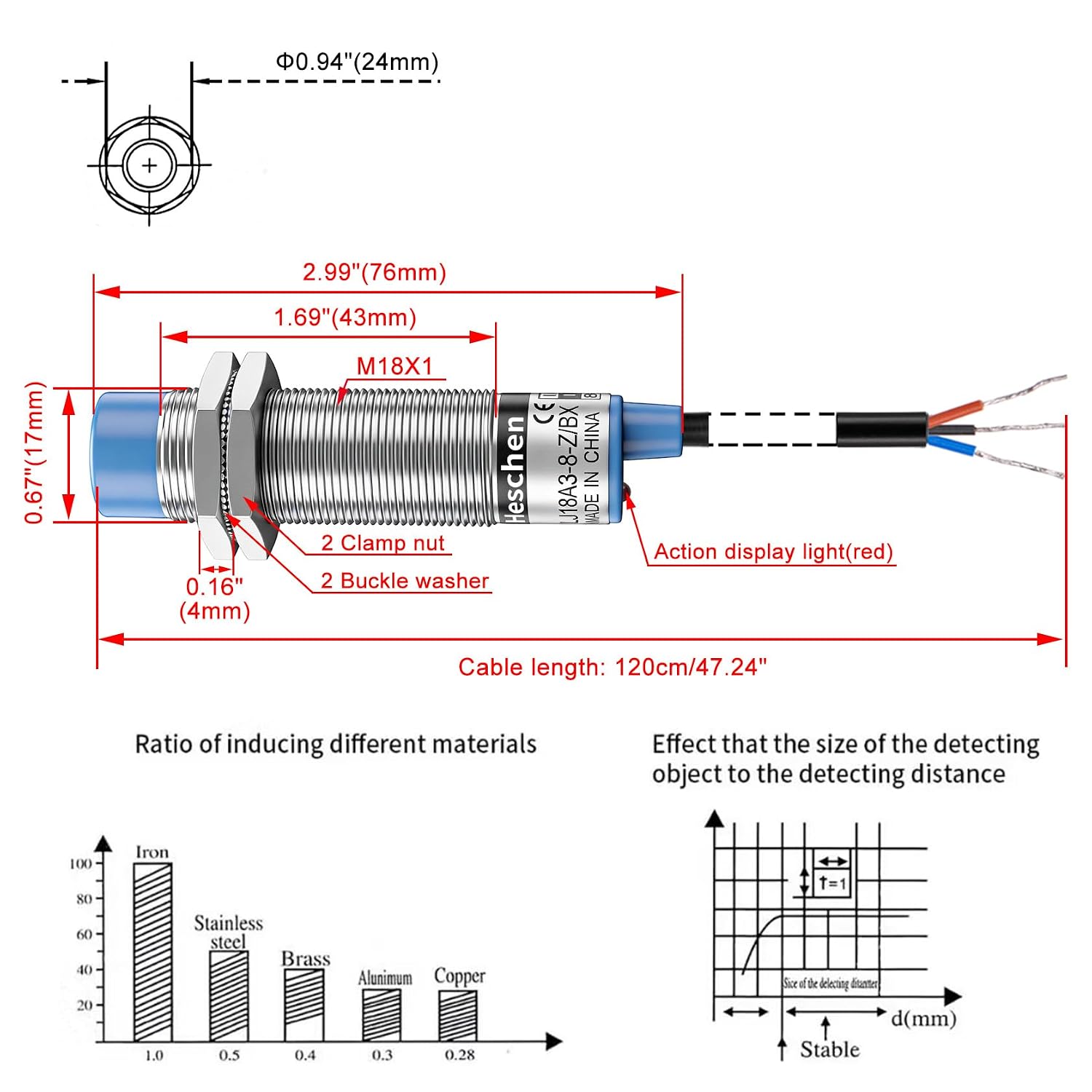
Heschen NO
$7.49
In stock on Amazon
Check price on AmazonMid-Tier Performance Pick: Keyence
Keyence (EH, IM, and EX series): Keyence’s published sensing distance specifications are consistently at or near the top of the range for a given form factor — a result of proprietary oscillator designs described in Keyence Corporation’s “Inductive Proximity Sensor Guide” technical document. The trade-off is unit cost: Keyence M12 PNP sensors run noticeably higher than comparable Omron or Banner units at standard distributor pricing. If your line is already Keyence-centric, the consistency in connector pinout and indicator LED behavior across the entire Keyence sensor family is a genuine integration time-saver that can offset the unit price premium on multi-sensor installations. Keyence’s application engineering team is also widely recognized in the industry for faster and more specification-specific support than most competitors — a practical advantage when you are commissioning under deadline pressure.
Keyence is the right call when maximum sensing range in a compact body matters more than unit cost, or when the installation is already running Keyence controllers and I/O.
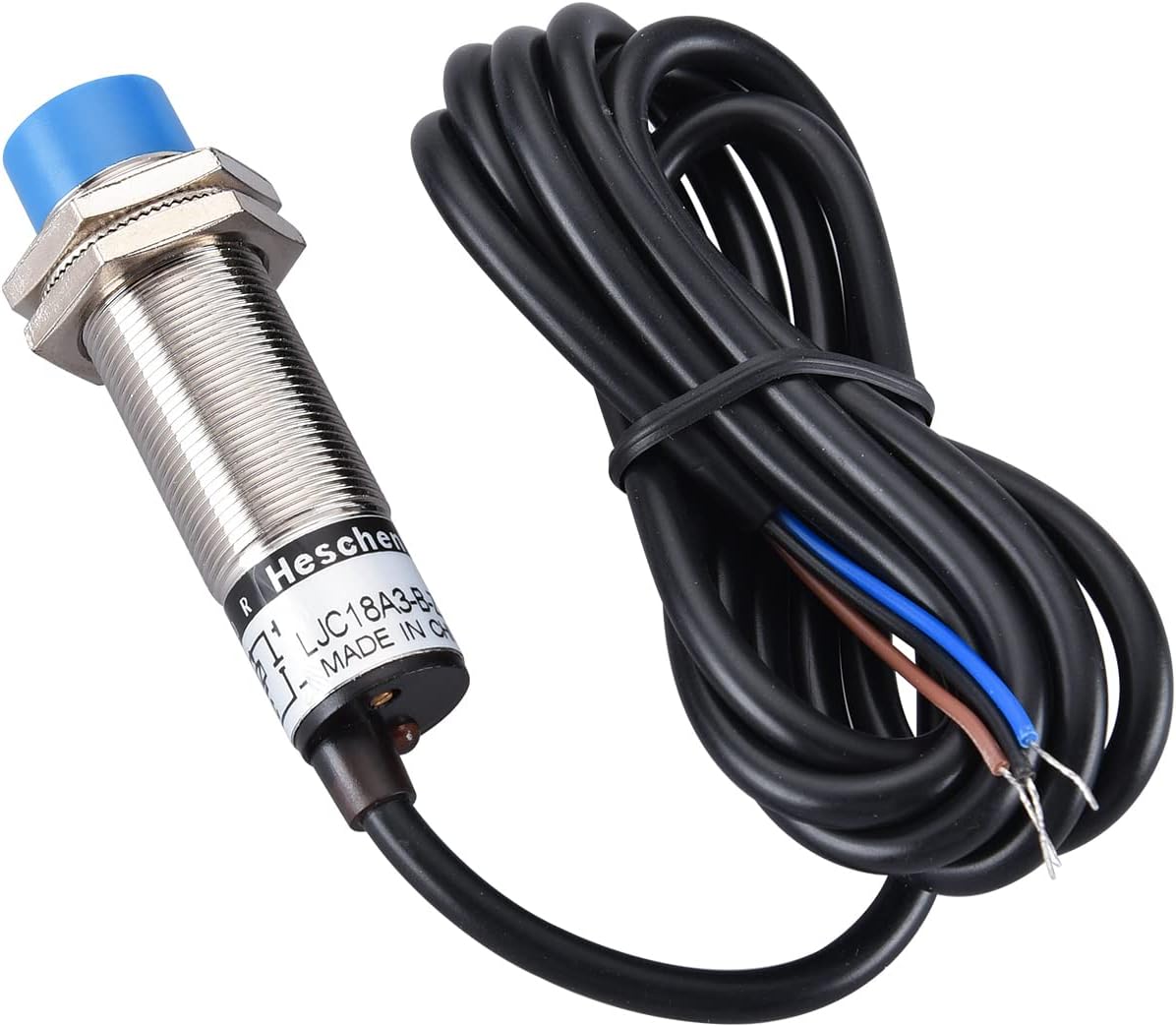
Heschen NC
$9.29
In stock on Amazon
Check price on AmazonPremium and Specialty Picks: Balluff and Sick
Balluff (BES M12/M18 IO-Link): Balluff’s primary catalog differentiator is IO-Link readiness. If your PLC infrastructure includes an IO-Link master — Turck, Balluff, and Siemens PN/IO-Link gateways are common choices — Balluff’s IO-Link inductive sensors deliver diagnostics including temperature, operating hours, and contamination alerts over the same 3-wire M12 cable used by a standard NPN/PNP sensor. Per Balluff Inc.’s “Inductive Sensor Selection Guide” technical sales document, the BES M12 IO-Link variant is electrically backward-compatible with a standard PNP digital input card: the sensor functions as a plain PNP device when no IO-Link master is present, and unlocks diagnostic capability only when polled by a master. The incremental cost over a standard unit — typically 30–50 percent — buys meaningful predictive maintenance visibility that can pay back within a single avoided unplanned downtime event at typical industrial labor rates. Control Engineering (controleng.com), in analysis of proximity sensor selection for PLC input modules, has identified IO-Link compatibility as an increasingly important selection criterion for new line builds, particularly where maintenance staffing is limited.
Sick (IME series): Sick’s engineering strength is environmental robustness. The IME12 and IME18 lines reach IP68 (continuous submersion rating) in standard catalog versions, and Sick AG’s “Inductive Proximity Sensors — Technical Overview” product family datasheet confirms rated operating temperature down to −25 °C — directly relevant for cold-storage logistics and outdoor installations. Machine Design (machinedesign.com) has identified fully encapsulated sensor housings as the key differentiator in stamping-press and heavy-vibration applications, where thermal cycling and mechanical shock can cause potting delamination in sensors with less robust construction. Sick’s IME series addresses exactly that failure mode.
Balluff is the premium choice for new line builds on IO-Link-capable controls platforms. Sick is the premium choice for any installation where sustained submersion, extreme temperature, or heavy vibration is the primary design constraint.
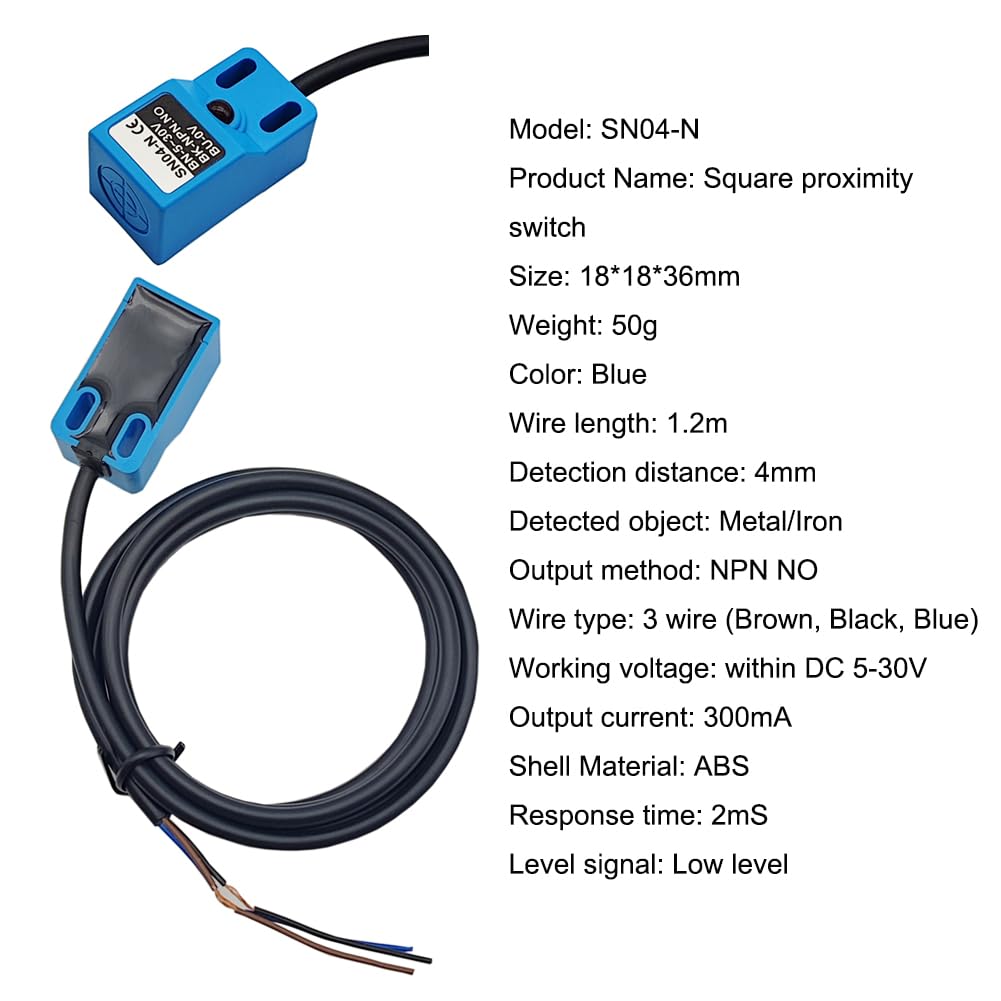
Inductive
$14.49
In stock on Amazon
Check price on AmazonDecision Rule: If X, Then Y
If your PLC is Allen-Bradley, Siemens, Schneider, or Beckhoff and you have not checked the input card spec sheet — default to PNP. Nearly all standard digital input cards from these manufacturers source current and expect a PNP (sourcing) sensor. Verify the input card model number against the manufacturer’s I/O module wiring diagram before ordering any quantity.
If your PLC is Mitsubishi, Keyence, Omron, or another Japanese-brand controller — default to NPN unless the I/O module documentation explicitly states PNP-compatible inputs. Omron Industrial Automation’s “Proximity Sensors — Principles and Selection Guide” technical reference document notes that Omron’s own PLC input cards are optimized for NPN sensors as the default wiring convention.
If you do not know the PLC input type and cannot access the I/O module datasheet before ordering, buy a sourcing/sinking (dual-output or “universal”) sensor variant. Both Balluff and Sick offer M12 units with selectable output polarity via a DIP switch or teach button. They cost roughly 15–25 percent more than a fixed-polarity unit, but they eliminate a re-order cycle and the associated line-down time.
If the sensing gap is ≤ 8 mm and the environment is standard (no washdown, no weld spatter): M12 flush-mount, any of the five major brands, standard IP67 housing. Omron E2B or Banner SM30 will be in stock at your nearest distributor.
If the sensing gap is > 8 mm or the environment involves washdown, submersion, or weld spatter: M18 non-flush — Sick IME18 for extreme environments, Balluff BES M18 IO-Link for new installations with IO-Link masters, Banner SM30 stainless for food-grade lines.
If your controls platform is IO-Link ready and you are spec’ing a new line from scratch: Balluff BES M12/M18 IO-Link. The diagnostic visibility pays back in less than one unplanned downtime event at typical labor rates.
Control Engineering (controleng.com), in analysis of proximity sensor selection for PLC input modules, reinforces this same priority sequence: output type first, form factor second, brand and feature set third. Get the first decision wrong and the rest of the spec work is wasted.
Affiliate disclosure: Recommendations are based on published manufacturer specifications, distributor availability data current as of May 2026, and aggregated owner reviews from major industrial distributors. AutomaticSensors.com has not independently tested any of the products listed.